

.jpg)
📌 Key Takeaways
Persian baklava is a traditional dessert known for its delicate layers of phyllo pastry, pistachios, cardamom, and fragrant rosewater. Unlike sweeter Turkish or Greek variations, the Persian version uses a lighter syrup that creates a balanced, floral flavor. The article explains the essential ingredients, measurements, preparation process, baking technique, and importance of allowing the baklava to rest overnight. It also highlights traditional serving options such as Persian chai, black tea, fresh fruit, and saffron ice cream. For an authentic experience, a Persian restaurant houston can offer this classic dessert alongside traditional Persian dishes.
Persian baklava is a traditional sweet dish known for its rich flavors and delicate balance of ingredients. Unlike many other versions, it relies on fragrant rosewater, cardamom, and pistachios instead of a heavy honey syrup, creating a lighter yet deeply satisfying dessert that has been enjoyed in Persian cuisine for generations.
That's really what makes it traditional rather than just another sweet treat. It's a recipe that has been carefully passed down through generations, where rosewater and cardamom take center stage instead of relying on excessive sweetness.
So, what is baklava at its most basic? Layers of crisp phyllo pastry, a flavorful nut filling, fragrant syrup, and a golden, flaky finish. Simple in concept, yet full of character. If you're looking for an authentic Mediterranean restaurant Houston diners love, Persian desserts baklava offers a delicately balanced take on this classic dessert. The Persian version stands out for its lighter, more floral flavor profile, making it a refreshingly different choice from other regional styles while still delivering the rich, flaky texture that makes baklava so irresistible.
How It's Different From Other Baklava
-
Turkish baklava leans on a thick honey syrup, usually with walnuts
-
Greek versions are similar, sometimes with cinnamon or clove
-
Persian baklava uses a lighter syrup, rosewater, cardamom, and pistachios instead
Same basic structure on paper. Completely different dessert once you taste it.
Persian Baklava Ingredients You Need
None of this is exotic; most of it sits on a regular grocery shelf. But a few small choices in the baklava ingredients change the outcome more than people expect.
Pistachios carry the filling. Chop them finely, not into powder, so you keep some texture in each bite. Some families stretch it with almonds too, which mellows the flavor and makes the batch go further.
Cardamom is where people quietly cut corners. Whole pods, ground fresh, taste sharper than whatever's been sitting pre-ground in a jar for months: five extra minutes, real difference.
The syrup is the real heart of it. Skip the heavy honey. Make a lighter sugar syrup instead, infused with rosewater, and a small pinch of saffron if you want to push it further. A splash of lemon juice keeps the rosewater from turning into something closer to a candle than food.
Quick shopping list, if you just want that part:
-
Pistachios, finely chopped, plus almonds if stretching the batch
-
Ground cardamom, ideally fresh
-
Sugar, for both filling and syrup
-
Rosewater, and a small pinch of saffron if available
-
A splash of lemon juice
-
Phyllo dough and unsalted butter, melted
The ingredient list is simple. What makes traditional Persian baklava special is the technique and patience that go into every layer.
Ingredient Measurements
-
18–20 sheets of phyllo dough
-
2 cups finely chopped pistachios
-
½ cup chopped almonds (optional)
-
1 teaspoon ground cardamom
-
1 cup sugar
-
½ cup unsalted butter, melted
-
½ cup water
-
2 tablespoons rosewater
-
1 teaspoon lemon juice
-
Pinch of saffron (optional)
Traditional Persian Baklava Recipe
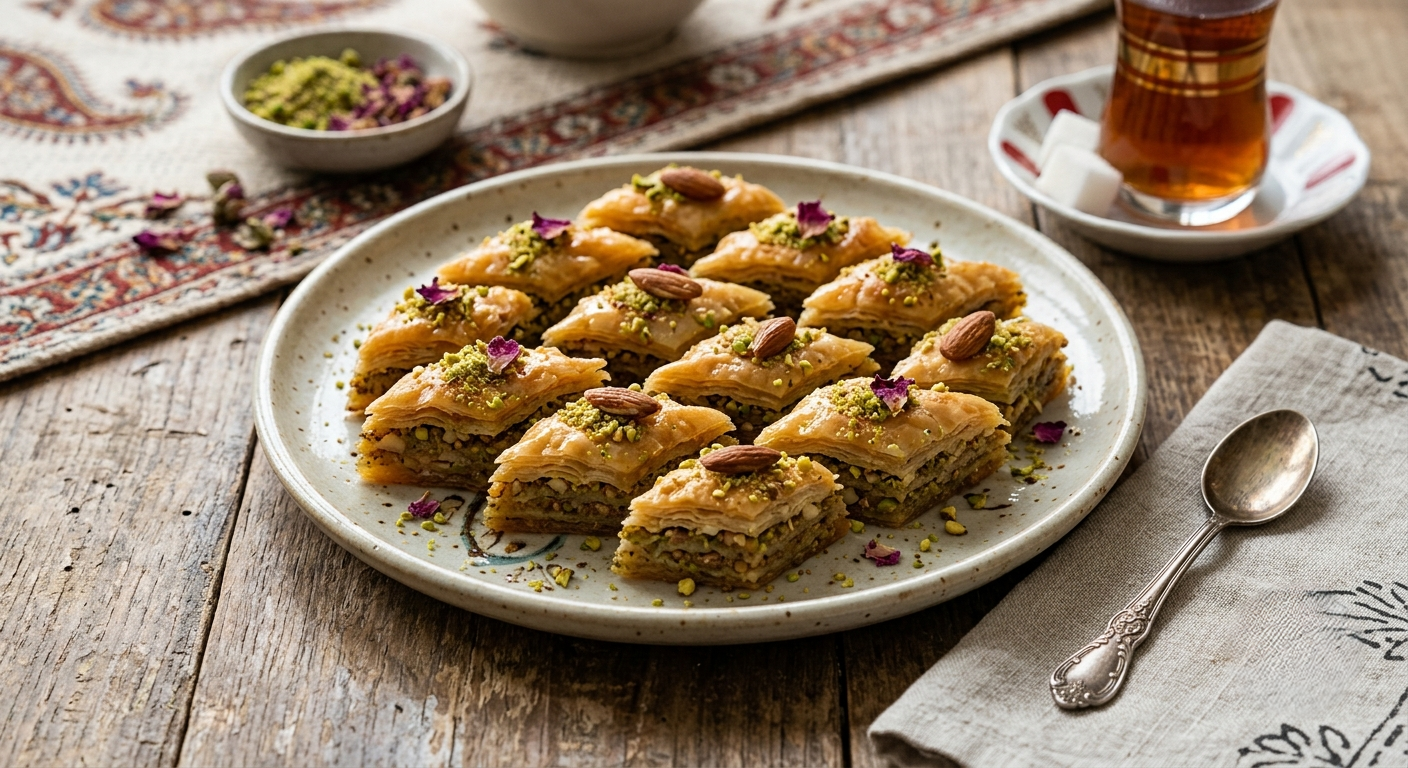
If you're wondering how to make baklava the traditional way, it mostly comes down to patience; you can't rush.
Mix the chopped pistachios with ground cardamom and a modest amount of sugar. Butter your baking dish, then layer phyllo sheets one at a time, brushing melted butter between each. After several layers, spread the pistachio filling across the top, then keep building: dough, butter, filling, until the sheets run out.
Most traditional recipes use around twenty to twenty-five phyllo sheets in total, although the exact number can vary depending on the recipe and the desired thickness of the pastry.
Cut it into diamonds before baking, not after, since baked phyllo shatters the second a knife touches it cold. Bake at 350°F (175°C) for 45–50 minutes, or until the pastry is evenly golden brown and crisp. Pour the warm syrup over it the moment it comes out, while both are still warm, so it soaks in evenly instead of sitting on top or drowning the corners.
Then comes the hard part. Let it rest, ideally overnight, before serving. The texture genuinely improves once it's had time to settle.
Quick recap of the process:
-
Mix the pistachio filling with cardamom and sugar
-
Layer phyllo and butter, adding filling partway through
-
Cut into shapes while the pastry is still raw
-
Bake until deep golden
-
Pour warm syrup on immediately, then let it rest overnight
A few things trip people up most. Cutting after baking instead of before ruins the presentation. Pouring syrup at the wrong temperature means it never soaks in properly. And going heavy on the rosewater turns floral into something closer to soap.
For the best texture, let the baklava rest overnight before serving. This allows the syrup to soak evenly into every layer while keeping the pastry crisp instead of soggy.
How to Serve Persian Baklava
This baklava dish isn't a casual snack. It's rich, and one small piece usually does the job, so cut it smaller than feels generous.
Strong black tea or Persian chai works better with it than coffee does, in my opinion, since the bitterness balances the sweetness instead of competing with it. Some families add fresh fruit on the side for a nice contrast against the warm pastry.
If you're exploring Persian food in Houston, many authentic Persian restaurants serve baklava as part of a traditional dining experience, making it the perfect way to finish a meal.
Good pairings worth trying:
-
Strong black tea or Persian chai
-
Fresh fruit, something slightly tart, works best
-
Saffron ice cream or rice pudding for a bigger persian cuisine spread
For a traditional presentation, garnish each piece with finely chopped pistachios or dried rose petals just before serving. It adds color, texture, and a subtle finishing touch without overpowering the dessert.
Curious what a full Persian meal looks like beyond dessert? Our post on popular Persian dishes covers the mains worth ordering alongside it. And for a broader look at persian food dishes across the city, that's worth a read too.
Conclusion: The Lasting Appeal of Traditional Persian Baklava
Persian baklava doesn't win you over with raw sweetness. It wins you over with restraint, rosewater against sugar, cardamom against pistachio, and that balance is why it's stuck around this long as a traditional sweet dish with rich flavors instead of fading like a passing trend.
Make it yourself if you've got a free afternoon and the patience. If you'd rather enjoy an authentic version without the work, Aban Persian Restaurant offers traditional Persian baklava made with the same balance of delicate pastry, pistachios, cardamom, and fragrant rosewater flavors. Whether you're looking for the best Persian food in Houston or simply want to end your meal with a classic dessert, it's a delicious way to experience authentic Persian cuisine.
Whether enjoyed at home or at an authentic Persian restaurant houston, this timeless dessert continues to bring people together with its delicate layers, fragrant spices, and perfectly balanced sweetness.
 Omojet