


.jpg)
📌 Key Takeaways
Nowruz begins on the spring equinox, and most of the celebration happens around the table. This guide covers the Persian New Year dishes, what each one means, and which ones are easy for beginners. You’ll also find easy Persian New Year dishes for large groups along with a few planning tips so the cook can enjoy the day too.
Nowruz marks the Persian New Year. It falls on the spring equinox, around March 20, and the celebration lasts about two weeks. Food is central during this time. Every dish carries meaning-health, luck, and a year of work. That’s a lot of meaning packed into one menu. It can feel overwhelming if you're new to it. Persian New Year dishes follow a pattern, and once you understand that pattern, planning becomes much easier. Here's what belongs on the table, what's simple to make, and how to put everything together.
What Makes Persian New Year Dishes Special?
Most holiday menus start with flavor. This one starts with symbolism. The flavor comes along for the ride.
Green herbs stand for rebirth. Fish stands for life. Sweets are a wish for a year. Even the color scheme is intentional-the whole table covered in green tells everyone that spring has arrived.
Three things set this menu apart from holiday spreads. First herbs go in by the bunch, not by the pinch. Second rice is the centerpiece steamed until the bottom turns into a crust called tahdig. Third, the menu rarely changes. Families cook the dishes every year, and I think that's the best part. Nobody asks for a version of sabzi polo mahi.
Saffron and rosewater run through both savory and sweet dishes. They add color and fragrance, which Persian cooks see as a sign that something worth celebrating is happening.
Traditional Persian New Year Dishes Served at Nowruz
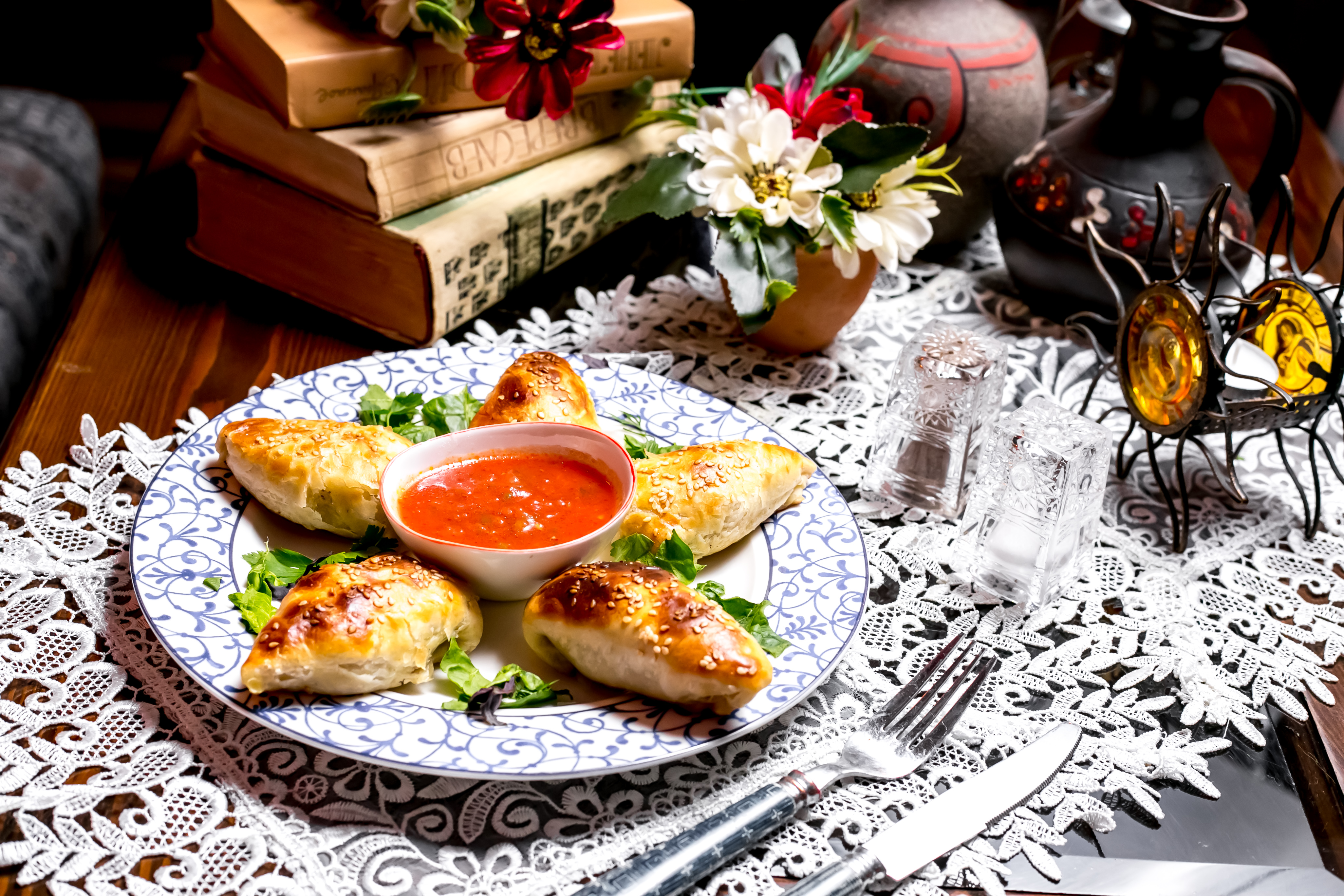
These are the dishes most Persian families expect to see. Some appear on Nowruz Eve others come later in the week.
Sabzi Polo Mahi (Herbed Rice with Fish)
This is the star of the show. Basmati rice mixes with chopped parsley, cilantro, dill and chives then steams until the whole kitchen smells like fresh greens. Fried white fish goes on the side.
The pairing has meaning. Herbs stand for growth and fish stands for life. It also tastes fantastic which is why most families consider it a must-have on Nowruz Eve.
Reshteh Polo
Reshteh polo is rice cooked with toasted noodles often topped with dates, raisins and saffron. The noodles represent the threads of life. Eating them is believed to help you untangle whatever the year brings.
It looks impressive. It’s just a small step up from plain saffron rice. The only thing to watch is the noodles-they burn fast. Keep an eye on the pan.
Kuku Sabzi
Kuku sabzi is a herb frittata. Parsley, cilantro, dill and eggs form the base. Some cooks add walnuts and barberries for a crunch and tartness. Cut it into wedges. Serve warm or at room temperature.
Green is the symbol again-renewal and hope. It works as a course, a side or even a sandwich filling the next day. I can’t imagine a Nowruz table without kuku sabzi.
Dolmeh and Ash Reshteh
Dolmeh are stuffed grape leaves filled with rice, herbs and sometimes meat. Each leaf gets rolled by hand. The dish takes patience. With hands it goes faster.
Ash reshteh is a soup with noodles, beans, lentils and herbs topped with fried onions and kashk. It’s tied to Sizdah Bedar, the day of the new year when families go outdoors. It also reheats well. A big pot goes a long way.
Simple Persian New Year Dishes for Beginners
If Persian cooking is new to you start small. Simple Persian New Year dishes let you join the tradition without using your weekend.
Kuku sabzi is the place to begin. It needs one bowl and one pan. Most of the work is chopping. Mast-o-khiar, which is yogurt with cucumber and mint requires no cooking all. Mirza ghasemi is an eggplant dip with garlic and tomato-you roast and mash. Borani esfanaj, a spinach and yogurt dip takes twenty minutes.
Plain saffron rice deserves a spot on the list too. A perfect tahdig can wait until your third try. A pale crust still tastes good. Nobody at the table will grade it.
Easy Persian New Year Dishes for a Gathering
Feeding a crowd changes how you cook. Easy Persian New Year dishes for a group need to be forgiving and mostly ready before guests arrive.
Ash reshteh and dolmeh are choices because they taste better after sitting in the fridge for a day. Herbs can be chopped two days ahead. Dips can be mixed the night before. Kuku sabzi, rice and yogurt sides scale up without effort.
A few habits help with batches. Cook rice in two or three pots instead of one giant one-steaming is more even. Set up a buffet so guests serve themselves. Put dishes out early to free up stove space.
Also don’t cook everything on the day. Spreading the work over two or three days keeps the food fresh. The host from burning out.
Persian New Year Dishes for the Haft-Seen Table and Sweets
The haft-seen table is the heart of Nowruz. It holds seven items whose names begin with the letter "seen." Most are for display. Samanu, a pudding made from sprouted wheat is the exception-it’s meant to be eaten.
The dessert table is where the fun begins. Nan-e nokhodchi are chickpea flour cookies that crumble when you bite into them. Nan-e berenji are rice flour cookies often flavored with cardamom. Baklava brings layers of pastry, nuts and syrup. Sohan is a saffron brittle loaded with pistachios. Koloucheh're filled cookies, often stuffed with dates or walnuts.
Each sweet is a wish for a sweet year. They pair perfectly with tea, which seems to flow nonstop during the holiday.
Tips for Planning Your Persian New Year Dishes Menu
A good menu feels balanced. You want rice, herbs, protein, a few sides and something sweet. Five versions of the dish won’t cut it.
Start with one rice dish, one protein and one herb dish. Then add two or three sides and a dessert. That covers the symbolism without making you overwhelmed.
Your shopping list will lean on herbs so buy parsley, cilantro, dill, chives and mint first. Saffron and rosewater are next though a little goes a way. Basmati rice, yogurt and eggs cover most of the basics. Dried limes, barberries and walnuts help with stews and rice dishes.
Some ingredients are hard to find. That’s fine. Dried cranberries can replace barberries. Fresh lemon juice works where a recipe calls for dried limes. The taste won’t match exactly. It will still be good.
Finally build a schedule. Chop herbs two days before. Prep dips the day. Save the rice. Fish for the day itself. You’ll thank yourself later.
Final Thoughts on Persian New Year Dishes
The best Nowruz table combines simple dishes to make the celebration feel special without exhausting the host. Choose a few traditional favorites, add easy sides, and finish with festive sweets. The food doesn’t have to be perfect; it just has to be shared. If you’re looking for a Persian restaurant in Houston to enjoy authentic Persian flavors and celebrate special occasions, Aban Restaurant can be a great place to explore Persian cuisine and make your gathering memorable.
 Omojet