


.png)
📌 Key Takeaways
Many catering menus in the United States repeat the set of chicken skewers and rice which gets boring very quickly for anyone who has more than a few events a year. Iranian catering offers something with layered rice, herb-rich stews and grilled kabobs, food that guests actually remember. This guide explains what makes Persian food catering different which dishes are right for which events and how to handle needs without losing taste.
Choosing a caterer usually comes down to one question: will people remember the food or just eat it. Iranian catering usually answers that question the way more often than a normal buffet does because the food has real skill and taste instead of just relying on quantity. According to Wikipedia, Iran produces nearly 90% of the world’s saffron, making the prized spice a cornerstone of Persian cuisine. It is commonly used in traditional rice dishes, stews, and desserts, where it adds a unique flavor, subtle aroma, and vibrant golden color.
What Makes Iranian Catering Unique?
Traditional Iranian food is not based on one dish. It is based on balance, rice, protein, herbs and something tart or sour all working together on one plate.
Technique Over Shortcuts
Tahdig, the crispy rice crust at the bottom of the pot needs real skill to make properly. Rushing it means burnt rice or a soggy mess. A caterer who gets tahdig right for fifty or a hundred guests has mastered something hard.
Fresh Herbs Aren't Optional
Cooking uses a lot of fresh herbs, such as mint, parsley, cilantro, dill, tarragon, not just as a garnish but as real flavor. Sabzi khordan, a plate of herbs served with the meal appears at nearly every gathering. It reduces richness. Adds a clean note that balances heavier stews.
A Cuisine Built for Sharing
Meals are naturally for sharing with dishes meant to be passed around. That makes catering for parties and bigger events a good fit since the food format already assumes a crowd.
Popular Iranian Catering Menu Options
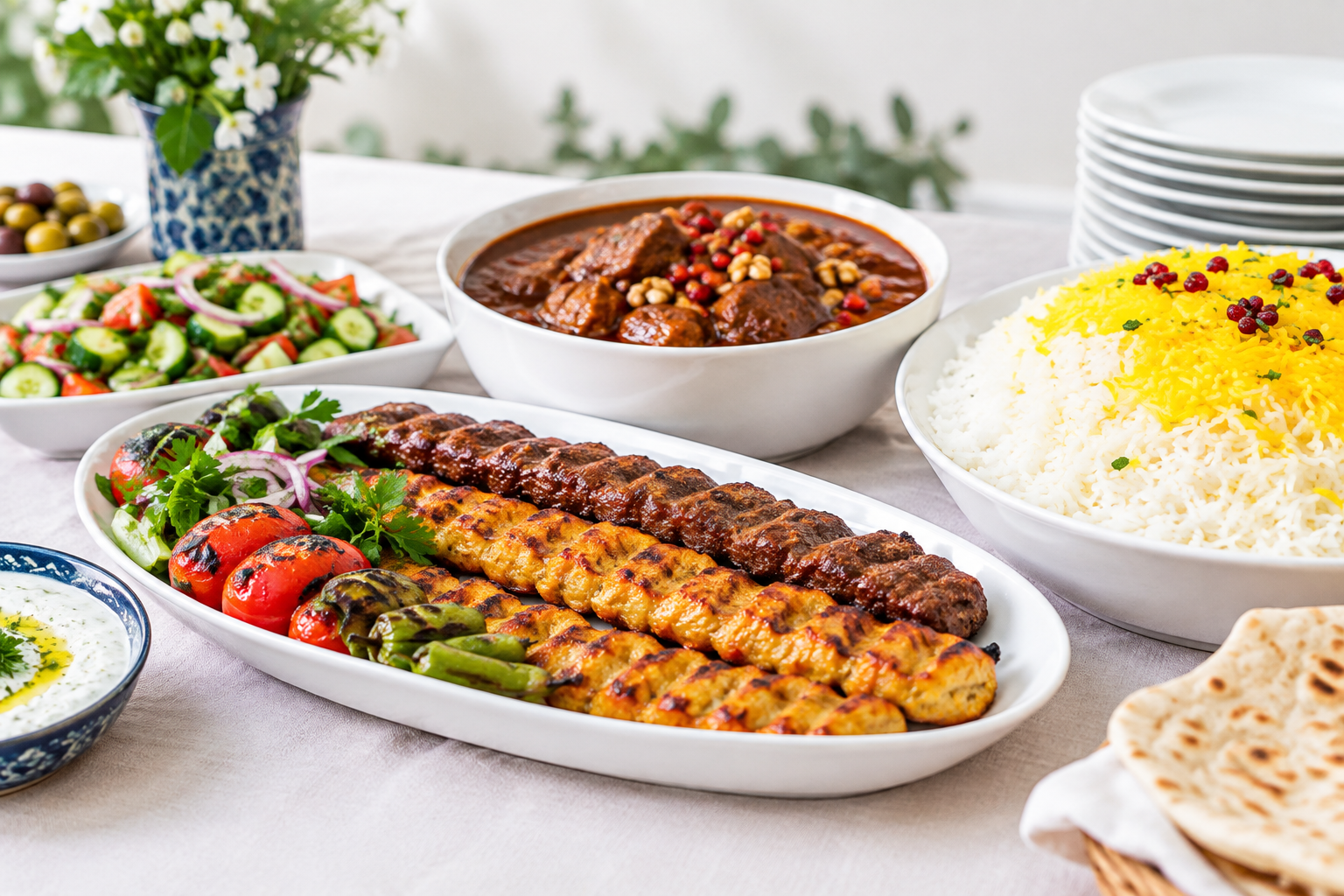
A good Persian food catering menu includes a few main categories.
Kabobs: Koobideh, which's ground beef or lamb kabobs and joojeh which is marinated saffron chicken are the usual choices. Both cook quickly. Hold up well on a buffet.
Rice dishes: Zereshk polo, rice with tart barberries and baghali polo, rice with dill and fava beans add color beyond plain rice. Saffron rice with tahdig is usually the center of most events.
Stews: Ghormeh sabzi, a cooked herb stew with kidney beans and dried lime and fesenjan a pomegranate and walnut stew often made with chicken add depth that kabobs alone can't provide.
Appetizers and sides:
-
Mast-o-khiar a cool cucumber yogurt dip
-
Kashk-e bademjan, a smoky eggplant dish
-
Sabzi khordan, herbs as a palate cleanser
-
Torshi, Persian pickled vegetables for acidity and crunch
-
Iranian Catering for Different Kinds of Events
Iranian Catering for Different Types of Events
Different occasions call for different approaches to the same core menu.
Weddings
Weddings usually need a spread: several kabob options, a rice dish beyond just saffron rice and a stew for guests who want more than grilled meat. Presentation is more important here too since photos of the food often end up in the wedding album.
Corporate Events
Persian catering for groups in an office setting works best with simple easy-to-eat choices. Kabob plates with rice are good because they don’t need plating and can travel well if there is a delay before serving.
Casual Gatherings and Family Celebrations
Smaller relaxed events have space for heartier stews that a formal wedding might skip. Fesenjan and ghormeh sabzi are great here because guests can enjoy a dish that's worth taking time over.
Halal and Dietary Options in Iranian Catering
Halal Persian food is standard practice for most Iranian caterers, not a special request since halal preparation fits naturally with traditional Persian cooking methods.
Vegetarian and Plant-Based Options
Vegetarian Persian food is easier to find than many people think. Baghali polo without meat, kashk-e bademjan, mirza ghasemi, an eggplant and tomato dish and various rice and bean dishes all work as full vegetarian courses.
Some things to check with any caterer ahead of time:
-
Halal certification or sourcing if needed for some guests
-
A vegetarian station for mixed-diet events
-
Nut content since walnuts are in dishes like fesenjan
-
Dairy content in dishes like mast-o-khiar for people who are sensitive to lactose
Why Choose Iranian Catering for Your Next Event?
Beyond taste Iranian catering gives something many standard event menus lack: variety within one consistent cuisine. Guests get grilled meat, different rice options, herb-heavy stews and fresh sides from the same tradition instead of a mix of different styles. It also usually looks good in photos. Travels well two important things for any event planner.
Final Thoughts on Iranian Catering
Persian food brings something really different to an event without asking guests to try something completely new. With kabobs, rice and herb-heavy stews there is variety to fit a formal wedding or a relaxed office lunch. Getting the details right, from crispy tahdig and fresh herbs to proper halal handling, is what makes halal catering Houston guests remember long after the meal is over.
 Omojet