


.png)
📌 Key Takeaways
Fesenjan is a classic Persian stew made with ground walnuts, pomegranate molasses, chicken, onions, and spices. Its rich, creamy texture and sweet-tangy flavor make it a beloved dish with a history spanning over 2,500 years. The recipe involves slow-cooking the walnut sauce before adding tender chicken for maximum flavor. It pairs beautifully with saffron rice, Tahdig, Shirazi salad, yogurt, and fresh herbs
Persian cuisine has a unique way of transforming simple ingredients into flavorful culinary masterpieces. The Fesenjan Persian Recipe is a perfect example, combining tender chicken, tangy pomegranate molasses, and ground walnuts to create a rich, aromatic stew. With its distinctive sweet and savory flavor, Fesenjan is a beloved dish that showcases the depth and character of traditional Persian cooking.
The history of this dish is quite exciting. This unique dish appeared more than 2,500 years ago. The reason why the dish has been existing for such a long period of time is its excellent taste. Walnuts add creaminess, and pomegranate molasses adds sourness to the dish. According to Wikipedia, Iran is responsible for nearly 90% of the world’s saffron production, making this valuable spice a cornerstone of Persian cuisine. It is commonly used in traditional rice dishes, stews, and desserts to provide a distinctive flavor, fragrant aroma, and vibrant golden color.
Cooking this dish at home is rather exciting but requires much time. That is why many people prefer to order this dish in Persian specialty restaurants. Aban Persian Restaurant cooks this ancient dish in the traditional way. Thus, guests have the opportunity to try authentic Persian tastes without spending much time in the kitchen. Both family dinners and celebrations will be perfect occasions for enjoying the taste of one of Iran's best dishes. Let's take a closer look at the unique Persian stew.
What is Fesenjan?
Fesenjan, or Fesenjoon, is a classic Persian stew. It features ground walnuts, pomegranate molasses, onions, warming spices, and either chicken or duck. Unlike other stews that use tomatoes or cream, Fesenjan relies on walnuts for its rich texture. As it simmers, the walnuts release oils, forming a thick, smooth, and tasty sauce.
Pomegranate molasses is another key ingredient. It adds a sweet and tangy flavor to the stew. This balance makes Fesenjan one of the most unique dishes in Persian cuisine.
The recipe is over 2,500 years old. Archaeological evidence shows that Fesenjan ingredients were noted on tablets from Persepolis around 515 BC. Though the recipe has changed, walnuts and pomegranates remain its core.
Once viewed as an expensive food due to its high cost of preparation and lengthy cooking process, Fesenjan used to be served at the banquets of kings, weddings, and family events. In today’s society, it continues to be an important aspect of Persian cuisine and is usually consumed on special occasions like Yalda Night.
Besides being very tasty, fesenjan is nutritious too. Walnuts have healthy fats, proteins, fiber, and minerals. Pomegranate is full of antioxidants.
For a true taste of authentic Persian dishes, visit Aban Persian Restaurant, where traditional recipes are prepared with carefully selected, authentic ingredients.
How to Make Fesenjan: Step-by-Step Guide
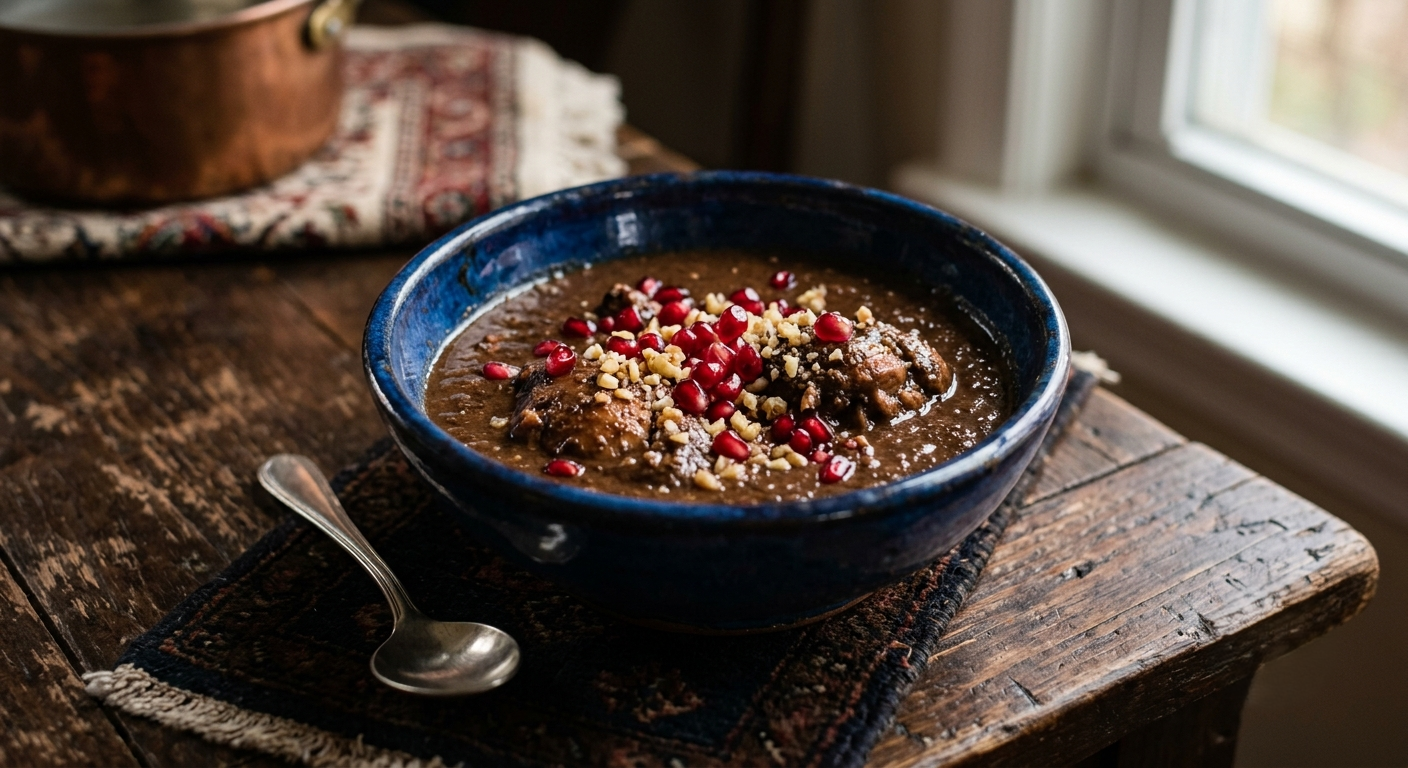
The Fesenjan Persian Recipe is simple to prepare but requires patience, as slow cooking allows the flavors to develop beautifully. Simmering the stew over low heat for a longer time helps create a rich, thick sauce with a deeper and more delicious flavor.
Step 1: Gather the Ingredients
Only high-quality fresh products should be used. You will require:
-
Ground walnuts
-
Chicken thighs or drumsticks
-
Pomegranate molasses
-
Onion
-
Turmeric
-
Salt
-
Black pepper
-
Cooking oil
-
Water or chicken stock
But there are instances when the cooks can opt to use pumpkins and/or butternut for the purpose of thickening without affecting the original flavor of the sauce.
Step 2: Prepare the Walnuts
Add the walnuts to a blender and grind them to make crumbs. It is important not to allow the development of walnut butter.
The finely ground walnuts cook uniformly and result in the velvety sauce.
Step 3: Brown the Chicken
Add salt, black pepper, and turmeric to season the chicken. Then heat oil in a big and thick pot.
Cook the chicken until it is slightly golden brown from all sides. Once done, keep the chicken aside.
Step 4: Cook the Onions
Add the chopped onions to the same pot. Fry them until they are soft and light golden brown.
The onions will season the stew. It is very important to note that hurrying this process may influence the flavor of the entire stew.
Step 5: Cook the Walnut Sauce
Fry ground walnuts along with the fried onions. Gently fry the ground walnuts for some time so that they release the aroma.
Next, pour in cold water or chicken stock. Use cold liquid to allow the walnuts to slowly give off their oils. Simmer the mixture until all the ingredients boil.
Step 6: Simmer Slowly
Place a lid on the pan, and cook the walnut sauce slowly for one or one and a half hours. It is advisable to stir the sauce from time to time in order to avoid burning.
As time goes by, the sauce becomes thicker and darker. Walnut oil could form on the top of the sauce. That is a good sign. It shows the walnuts are releasing their natural richness.
Step 7: Add the Pomegranate Molasses
The next thing to add is pomegranate molasses. Pay attention to the fact that its color changes to dark brown color from light brown initially.
Taste the sauce to proceed. If it’s too sour, add sugar. If it is too sweet, then pomegranate molasses can fix this problem. We shouldn’t make our stew too sour or sweet. It should offer both flavors together.
Step 8: Return the Chicken
Place the chicken again in the pot. Let it cook for 45-60 minutes on low heat. It must acquire a creamy gloss with a dark brown color.
When cooking, the chicken will absorb the entire richness of walnut sauce and will turn out to be soft, torn to pieces by a fork. The meal should have a thick, creamy glossiness with its dark brown color.
Preparing Fesenjan at home can be a rewarding way to experience Persian food culture. However, if you’re short on time or prefer to dine out, searching for Persian food near me can lead you to Aban Persian Restaurant, where authentic Persian dishes are prepared using carefully selected, high-quality ingredients.
What to Serve with Fesenjan?
Fesenjan is flavorful and has an amazing sauce, which makes it creamy and rich. Picking proper side dishes will enable us to compose an ideal Persian meal that includes harmony in every dish.
Persian Saffron Rice
Saffron Persian rice is an ideal side dish that will perfectly complement Fesenjan. Its fragrant and light taste makes the combination perfect.
Tahdig
Every Persian feast is not complete without Tahdig. It is a crust of fried rice that appears on the bottom of the pot after cooking, and that contrasts perfectly with creamy fesenjan sauce.
Shirazi Salad
New Shirazi salad can be an excellent accompaniment that will make the entire meal tastier and more interesting. A salad made up of cut cucumbers, tomatoes, onions, and some citrus is refreshing during the intervals between the main course.
Yogurt-Based Sides
Yogurt, plain yogurt or even mast-o-khiar would be another side dish that would go with Persian food. The taste of the yogurt is well complemented by the taste of the warm sauce. Fresh herbs bring extra freshness to the dish.
Fresh Herbs
This dish is called “Sabzi Khordan.” It’s best enjoyed with Persian foods. The list of components consists of mint, basil, parsley, green onion, and radish, providing important tastes to the recipe.
However, at any rate, this meal will make Fesenjan a full Persian meal because of its balanced flavor.
Why Is Iranian Food Fesenjan Loved Around the World?
Most of the traditional persian dishes have been popular for decades, but only a few dishes have been popular for thousands of years. This has been done well by Fesenjan since it offers something different from almost all other stews.
The reason behind this is that the dish is unique in terms of its flavor. Usually, stews come in the categories of spicy, savory, or creamy. But Fesenjan consists of four flavors in every bite.
Another important factor is the slow cooking of the stew. This gives room for the gradual release of oil from walnuts that creates the texture of the stew.
History adds another layer of appreciation. It is believed by food experts that this recipe has been in existence for over 2,500 years. It has been one of the oldest recipes among Persian dishes.
The significance of this food in cultural terms is much deeper than just being part of the daily meal.
This traditional Persian food is perfect for special occasions such as wedding celebrations, family gatherings, and Yalda Night. As one of Iran’s most cherished festivals, Yalda brings families together to share food, recite poetry, and celebrate unity. For larger celebrations, Persian food catering can make it easy to enjoy authentic dishes while creating a warm and memorable dining experience for everyone.
Another reason for the popularity of these ingredients is their composition.
Walnuts are rich in healthy fats, protein, and fiber. In addition to this, they also contain manganese and copper. Manganese and copper are very significant for the body.
Pomegranates are naturally rich in antioxidants and polyphenols. Scientists are studying the effects of these elements on our bodies. This makes pomegranates very important in Mediterranean and Middle Eastern diets.
That combination gives Fesenjan something many traditional comfort foods cannot offer. It feels decadent yet contains nutritious elements at the same time.
The other reason for its continued popularity is the flexibility of the dish.
The chicken is the most popular ingredient today. However, duck is used traditionally in northern Iran. Some families make it without meat, using roasted eggplant, mushrooms, or butternut squash. The pomegranate and walnut sauce, however, remains the same.
Every home has its own way of making this dish, but there are standard methods for dishes overall.
This adaptability has played a key role in taking Fesenjan much farther than Iran. Now, the dish can be found in Persian restaurant houston around the world. For those who are searching for the real taste of this amazing dish, Aban Persian Restaurant offers rich and flavorful Persian dishes cooked using the best quality ingredients and spices. Our chefs use authentic cooking techniques and ensure to provide a tasty dish.
Conclusion: Bring the Authentic Fesenjan Persian Recipe to Your Table
Some recipes satisfy hunger. Others tell a story. Fesenjan does both!
This mouth-watering Persian dish combines the necessary elements, all representing the history of Persia. Cooking this dish requires time and patience, a result that cannot be rushed, as every element of the dish affects the taste.
If you’re craving the authentic flavors of Persia, trust Aban Persian Restaurant, recognized as one of the best Iranian restaurants in Houston. Our menu features traditional dishes prepared with authentic ingredients and rich, flavorful recipes. Explore our menu and order your favorite Persian dish today!
Good food and flavors should never be neglected; try them today!
 Omojet