


.png)
📌 Key Takeaways
Vegetarian Persian cuisine offers much more than the kebabs and meat dishes it is often associated with. This article explores how fresh herbs, legumes, vegetables, rice, yogurt, saffron, dried lime, and barberries create flavorful plant based meals with a distinctive balance of savory, sweet, and tangy notes. It covers traditional favorites such as Kashk e Bademjan, Mirza Ghasemi, Ash Reshteh, Kuku Sabzi, Adas Polo, Dolmeh, Baghali Polo, Salad Shirazi, and Borani. It also discusses the nutritional value of these dishes and why a Persian restaurant Houston can be a great place to experience authentic vegetarian Persian flavors.
Many people assume Persian cuisine is centered around kebabs and meat-based dishes, but that's only part of the story. Traditional Persian cooking also features a wide variety of vegetarian dishes made with fresh herbs, legumes, rice, vegetables, and aromatic spices. From hearty soups and flavorful rice dishes to smoky eggplant appetizers and herb-packed specialties, vegetarian Persian food offers depth, variety, and satisfying flavors without relying on meat.
In this guide, we'll explore some of the most popular vegetarian Persian dishes, the ingredients that make them unique, and why Persian cuisine is an excellent choice for anyone looking to enjoy flavorful plant-based meals.
Overview
Persian cuisine is known for its balanced flavors, aromatic herbs, and carefully prepared ingredients. While many people associate Persian food with kebabs and other meat-based dishes, vegetarian options have long been an important part of traditional Iranian cooking. Fresh herbs, legumes, rice, vegetables, yogurt, and distinctive seasonings such as saffron, dried lime, and barberries are commonly used to create flavorful and satisfying meals.
Many vegetarian Persian dishes rely on a combination of savory, sweet, and tangy flavors that work together to create depth and balance. From hearty soups and lentil-based rice dishes to smoky eggplant specialties and herb-rich recipes, Persian vegetarian cuisine offers a wide variety of options that showcase the diversity of traditional Iranian food. Whether you're dining at a Mediterranean restaurant Houston or a Persian restaurant Houston, these classic dishes offer an authentic taste of Iran's rich culinary heritage.
Essential Ingredients in Vegetarian Persian Food
You can't really appreciate Persian vegetarian cooking without understanding the building blocks. These ingredients explain why the food tastes the way it does.
Fresh Herbs, and a Lot of Them
In most cuisines, herbs are finishing touches. A sprinkle of parsley, a few basil leaves. In Persian cooking, herbs are structural. Ghormeh sabzi - arguably the most beloved Persian stew - is built on finely chopped parsley, fenugreek, and dried herbs cooked down until they become dense and almost jammy. You don't taste herbs in that dish. You taste the dish, and the dish is herbs.
Kuku sabzi follows the same principle. It's essentially a frittata where herbs outnumber eggs by a significant margin. Fresh dill, parsley, cilantro, and fenugreek are packed into something that holds together just barely. It's unlike anything else.
Legumes
Lentils, white beans, kidney beans, chickpeas - they appear constantly. They add protein without making dishes heavy. They hold flavor well. And in soups like ash reshteh, multiple types of beans work together, each one contributing a slightly different texture.
Rice, Properly Done
Persian rice is not an afterthought. It's parboiled, then steamed over low heat with oil or butter until the bottom forms a golden crust called tahdig. The grains stay separate and fluffy. The crust gets crispy and slightly caramelized. Tahdig is often considered the most prized part of a Persian rice dish because of its crispy texture and rich flavor.
When rice gets mixed with fresh herbs, lentils, broad beans, or dried fruit, it becomes its own dish - not a side, but the point.
Saffron, Dried Lime, and Everything That Makes It Persian
Saffron is expensive and worth it. A small pinch of bloomed in hot water turns rice golden and adds a floral, slightly honey-like depth that nothing else replicates. Dried lime - limu omani - is harder to describe. It's sour, slightly bitter, and earthy all at once. Drop a few into a stew, and they slowly release a flavor that anchors the whole pot. Turmeric and cinnamon do quite well in the background. Barberries add tiny bursts of tartness.
These aren't interchangeable with other spice traditions. Persian cooking has its own flavor logic, and once you recognize it, it's unmistakable, especially at some Persian restaurant Houston that specialize in authentic recipes.
Popular Vegetarian Persian Veggie Dishes
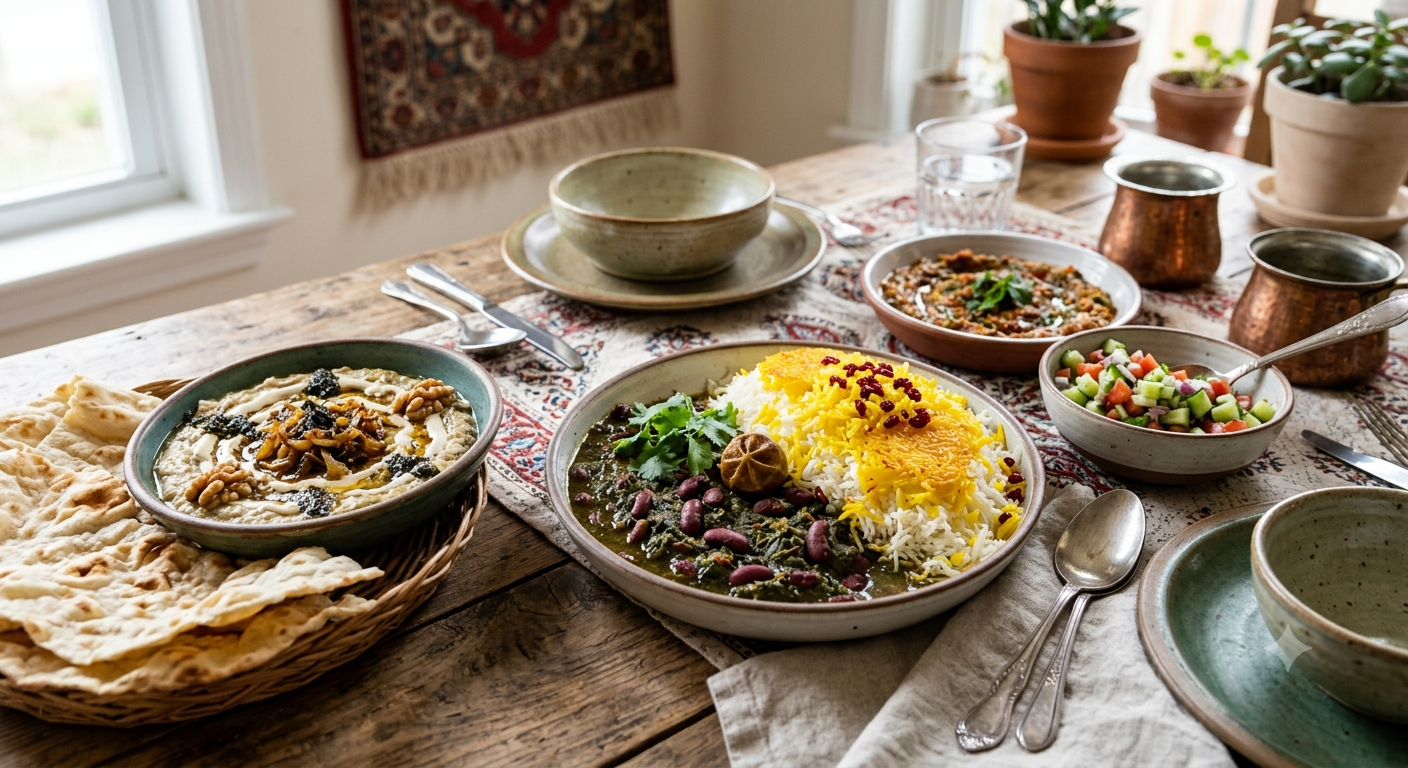
Whether you're dining at a Persian restaurant Houston or exploring Persian cuisine for the first time, the following vegetarian dishes are among the most popular options, each offering unique flavors and traditional preparation methods.
Kashk-e Bademjan
Eggplant cooked slowly with onions and garlic until completely soft, then combined with kashk - a fermented whey product with a thick, tangy richness that's somewhere between yogurt and sour cream but more intense than either. Fried onions and dried mint go on top. Sometimes walnuts.
The texture is smooth and creamy. The flavor is smoky, savory, and a little sour. It comes out warm with flatbread, and it's one of those dishes where you keep going back for more without quite meaning to. Start here if you've never tried Persian food before.
Mirza Ghasemi
This one is from the north, near the Caspian coast, and it shows that the cooking style up there is different from the rest of Iran. Eggplants get charred directly over a flame or under a broiler until the skin is black and the inside is completely soft and smoky. Then they're mashed with roasted tomatoes, a generous amount of garlic, and turmeric.
It's rough in texture, bold in flavor, and distinctly smoky in a way that reads as almost barbecue-adjacent. It traditionally includes eggs, but the base - without eggs - is fully satisfying on its own.
Ash Reshteh
This is a thick soup made with multiple types of beans, fresh herbs, flat wheat noodles called reshteh, and topped with kashk, crispy fried onions, and dried mint. It takes real time to make properly. The beans need to soften fully. The herbs need to cook down. Everything needs to merge.
The result is dense and layered. There's earthiness from the beans, brightness from the herbs, tang from the kashk, and crunch from the onions. It's traditionally made for the Persian New Year and important gatherings, which should tell you something about how seriously Iranians take it.
Kuku Sabzi
A Persian herb frittata, but calling it that undersells it. The ratio is heavily herb-forward - barely enough egg to hold everything together. Parsley, dill, cilantro, fenugreek, sometimes spinach. Pan-fried until set, sliced into wedges, served at room temperature.
It's light enough to eat as a snack and substantial enough to be a meal. The flavor is intensely green and fresh. If you're someone who thinks they don't like frittatas, try this one. It's a different category.
Adas Polo
Lentil rice. The lentils cook separately, then get layered with the rice. Caramelized onions go in. Sometimes raisins or dates. The whole thing steams together until the bottom forms that coveted crust.
The sweet-savory combination sounds odd until you eat it. The slight sweetness from the raisins cuts through the earthiness of the lentils in a way that makes complete sense. It's a full meal on its own - filling, protein-rich, and genuinely satisfying.
Dolmeh
Grape leaves stuffed with herbed rice and spices. Persian dolmeh tends to be lighter and more herb-forward than what you'd find in Greek or Turkish cooking. They're served with lemon and eaten warm or at room temperature. Elegant as a starter, easy to keep eating past the point of stopping.
Baghali Polo
Rice cooked with fresh dill and broad beans. The color turns a soft green. The flavor is clean and aromatic. This is one of the lighter Persian rice dishes - not heavy or rich, just fragrant and well-constructed. The tahdig on this one is particularly good when done right.
Salad Shirazi
Cucumber, tomato, and onion, all cut very small, dressed with lemon juice and dried mint. That's it. No lettuce, no complicated dressing. It's served cold, it's crisp, and it does exactly what a good simple salad should do - refresh your palate and balance out everything heavier on the table.
Borani
A class of yogurt dishes mixed with cooked vegetables. Borani esfenaj is spinach with yogurt and garlic. Borani bademjan mixes roasted eggplant into yogurt. Both are cool, tangy, and creamy. They serve the same function as a raita in Indian cooking - cooling and grounding between richer bites.
Is Persian Food Healthy?
Generally, yes. But it depends on how you eat it.
The vegetarian options in Persian cooking are built mostly on whole ingredients - legumes, fresh herbs, vegetables, eggs, and yogurt. There's very little processing involved. Spices like turmeric and saffron have real anti-inflammatory and antioxidant properties, not just marketing claims. The herb-forward dishes deliver a surprising amount of nutritional value, because those herbs aren't decorative - they're the ingredient.
Legume-based dishes like adas polo and adasi (a simple lentil preparation) provide plant-based protein without relying on anything manufactured. Ash reshteh has multiple protein sources in one bowl. That's real food doing real work.
The honest caveat: some dishes are rich. Kashk is high in fat. Persian rice uses oil or butter for the tahdig. These aren't diet foods. But they're also not the kind of rich that comes from industrial ingredients - they're rich in the way that whole, traditional cooking sometimes is.
The other thing worth knowing: Persian foods are designed to be shared. Multiple dishes at the table, eaten in variety. A small scoop of this, a bite of that, some fresh herbs and bread in between. That structure naturally creates balance. The problem only comes from eating one dish in enormous quantities, which isn't really how the cuisine is meant to work anyway.
Conclusion: The Richness of Vegetarian Persian Dishes
Vegetarian Persian food offers a wide variety of dishes built around fresh herbs, legumes, rice, vegetables, and traditional seasonings. From comforting soups like Ash Reshteh to flavorful rice dishes such as Adas Polo and aromatic herb-based specialties like Kuku Sabzi, Persian cuisine provides numerous satisfying plant-based options.
Whether you're a vegetarian or simply looking to explore new flavors, Persian cooking delivers a unique balance of savory, sweet, tangy, and aromatic elements that make every meal memorable. Exploring these traditional dishes at a Mediterranean restaurant Houston is an excellent way to experience the depth and diversity of Iranian cuisine.
 Omojet