


.png)
📌 Key Takeaways
Authentic Persian food combines fragrant spices, fresh herbs, saffron, aromatic rice, dried fruits, and nuts to create balanced sweet, sour, and savory flavors. Classic dishes such as Kobideh Kebab, Ghormeh Sabzi, Zereshk Polo, Fesenjan, and Tahdig showcase the depth of Persian culinary traditions. Essential ingredients like saffron, dried limes, barberries, pomegranate, and fresh herbs give Persian dishes their distinctive taste and aroma. With its traditional cooking techniques and rich cultural heritage, Persian cuisine offers a unique and memorable dining experience.
Authentic Persian food is known for its rich flavors, fragrant spices, and centuries-old cooking traditions. Rooted in Iranian culture, Persian cuisine brings together premium ingredients such as saffron, fresh herbs, dried fruits, nuts, and aromatic rice to create dishes that are both comforting and elegant. Every recipe reflects a careful balance of sweet, sour, savory, and herbal flavors, making Persian food one of the world's most distinctive culinary traditions.
From perfectly steamed rice with a golden, crispy crust to slow-cooked stews, flavorful kabobs, and refreshing yogurt-based sides, traditional Persian recipes celebrate fresh ingredients and time-honored techniques. Whether you're trying Persian cuisine for the first time or looking to recreate authentic dishes at home, understanding its essential ingredients, cooking methods, and signature recipes will help you appreciate what makes this cuisine truly unique. According to Wikipedia, Iran produces approximately 90% of the world’s saffron, a signature ingredient in Persian cuisine. This makes saffron an essential part of traditional Persian rice dishes, stews, and desserts.
In this guide, we'll explore the traditional flavors of authentic Persian food, the must-try dishes, pantry staples, and classic recipes that define this remarkable cuisine.
What Makes Authentic Persian Food Unique?
Firstly, balance. Persian cooking leans on "warm" and "cool" ingredients, a concept baked into the cuisine for centuries now, aiming for food that feels nourishing rather than heavy or flat.
Herbs aren't a garnish. Full stop, honestly. Parsley, cilantro, dill, mint, fenugreek- these show up in generous handfuls, not sprinkled on at the end for color. Ghormeh Sabzi is practically herbs, with meat playing more of a supporting role than the lead.
Rice preparation is considered one of the most important parts of Persian cooking. Traditional methods involve rinsing, soaking, and steaming the rice to create light, fluffy grains topped with the famous crispy layer known as tahdig.
A few things separating this cuisine from other regional cooking, roughly:
-
Fresh herbs as a core ingredient, not a topping tossed on after
-
Sweet and sour combos, usually built around pomegranate, dried lime, or barberries
-
Rice is cooked in stages instead of being simmered all at once in one pot
-
Saffron is used generously, not rationed for special occasions only
-
A real tradition of slow-cooked stews, khoresht, built over hours of low heat
List of Persian Foods You Should Experience
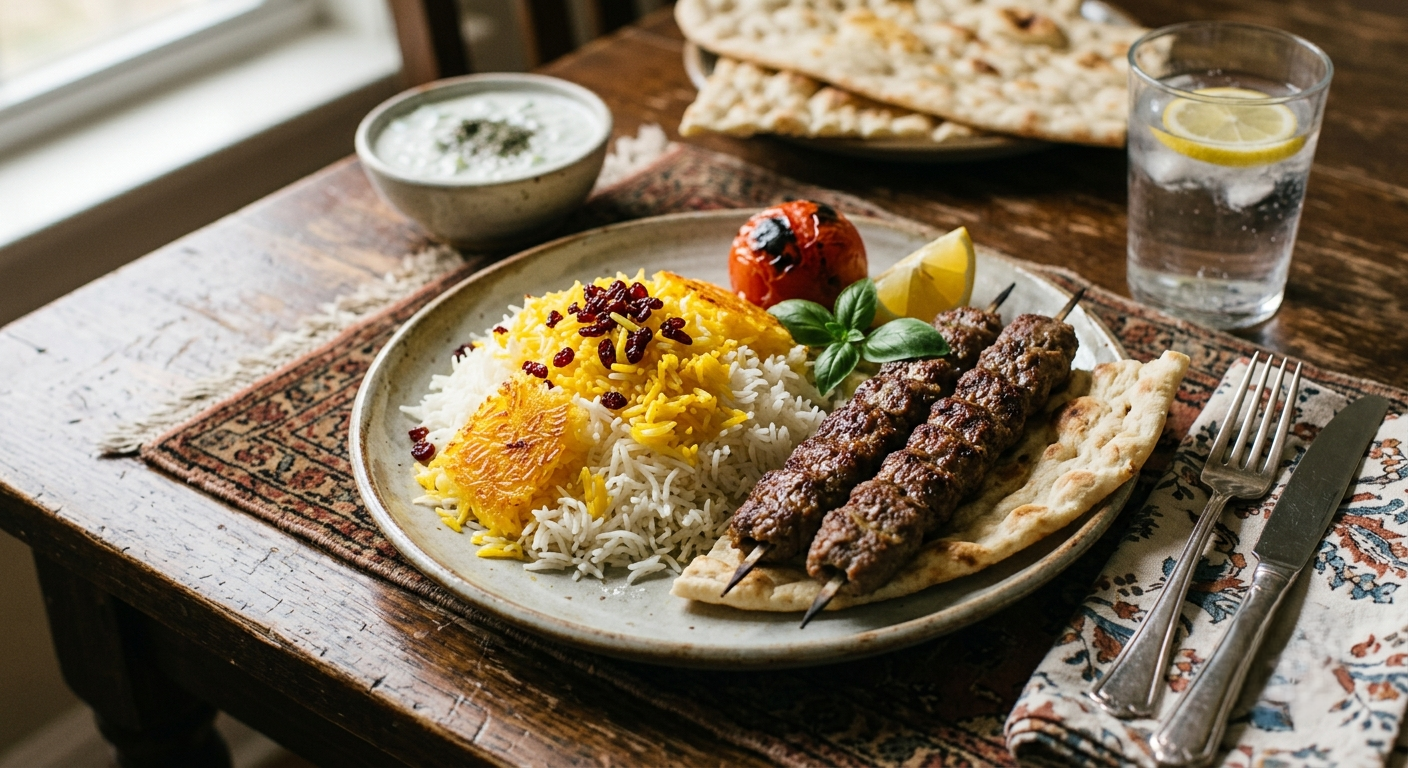
A few dishes give a genuinely fair starting point, not just whatever's most famous.
-
Kobideh Kebab - seasoned ground lamb or beef, grilled on skewers, usually the first dish people try and often the exact reason they come back for more
-
Ghormeh Sabzi - a deeply herbed stew with kidney beans and dried lime, considered by plenty of Iranians the most iconic dish in the whole cuisine
-
Zereshk Polo - saffron rice studded with tart barberries, usually next to chicken, a staple at celebrations everywhere
-
Tahdig - the crispy rice crust, sometimes ordered on its own because people ask for it that specifically, that often
-
Fesenjan - a stew built on ground walnuts and pomegranate paste, sweet, tart, genuinely unlike anything in Western cooking
-
Ash Reshteh - a thick noodle and herb soup, topped with kashk, popular in colder months and religious gatherings alike
-
Dizi (Abgoosht) - a slow-cooked meat and bean stew with its own eating ritual - broth first, mashed solids with bread after
-
Adas Polo - lentil rice, simpler than most on this list but still deeply flavorful, a good place to start if you're nervous
This list's just a starting point, not the finish line. Work through a few of these, then chase down Tahchin, Baghali Polo with lamb shank, and Koofteh Tabrizi - that stuffed meatball dish actually registered as a national culinary heritage item in Iran.
Essential Persian Cooking Ingredients
Persian cooking ingredients aren't exotic so much as specific. Precise, even. A decent pantry usually has these on hand:
Saffron sits at the top, obviously - color, aroma, that unmistakable floral note running through dish after dish. Dried limes, called limoo amani, add a sour, faintly smoky depth to stews that fresh lime just can't fake. Barberries bring small, tart bursts to rice dishes, cutting against saffron's warmth nicely.
Fresh herbs get bought in bulk here, not by the sprig - parsley, cilantro, dill, mint, fenugreek, all of it. Pomegranate molasses, thick and tangy, is basically non-negotiable for something like Fesenjan. Basmati rice, specifically long-grain, since texture matters an enormous amount in this style of cooking. And rosewater, used sparingly, mostly in desserts but sometimes slipped into a savory dish for a floral edge you don't quite expect.
None of this is hard to track down anymore, for what it's worth. Most mid-sized grocery stores carry dried limes and barberries these days, and a Middle Eastern market nearby will have the rest without much digging.
What Is Saffron and Why Is It Important in Persian Cuisine?
Saffron comes from the thread-like stigmas of the Crocus sativus flower, hand-harvested one thread at a time. Tedious, genuinely - it takes something like 75,000 blossoms for a single pound, which is exactly why it's nicknamed red gold and priced to match.
In Persian cooking, saffron's not a garnish, not some background note you barely register. It's foundational. Rice gets its golden color and floral smell from saffron steeped in hot water first, then worked through the dish in layers. Stews use it, teas use it, even a few desserts - though rice remains its most famous stage by a wide margin.
There's cultural weight here too, beyond just flavor. That golden color ties to celebration and abundance in Persian tradition - weddings, Nowruz, any meal meant to feel special rather than just another Tuesday dinner. Skimp on saffron in a dish built around it, and you've kind of missed the whole point of cooking it in the first place.
Conclusion: Experience the Rich Flavors of Authentic Persian Food
Persian food asks for a little patience and an open mind about what a "main dish" can even look like. Herbs as a base ingredient. Rice is treated like a craft. A spice pricier than gold, used generously rather than rationed. None of it's complicated once the logic clicks into place.
Searching for the best Persian food in Houston, or just typing "middle eastern food near me" hoping for something better than another gyro? Look specifically for Persian on the menu, not a generic Middle Eastern label slapped over everything. The difference is obvious fast, once you taste it. A genuine Persian restaurant Houston locals actually point people toward for Persian dishes will have saffron rice, herb-heavy stews, and tahdig on the menu. Not just hummus and shawarma stacked side by side.
 Omojet