


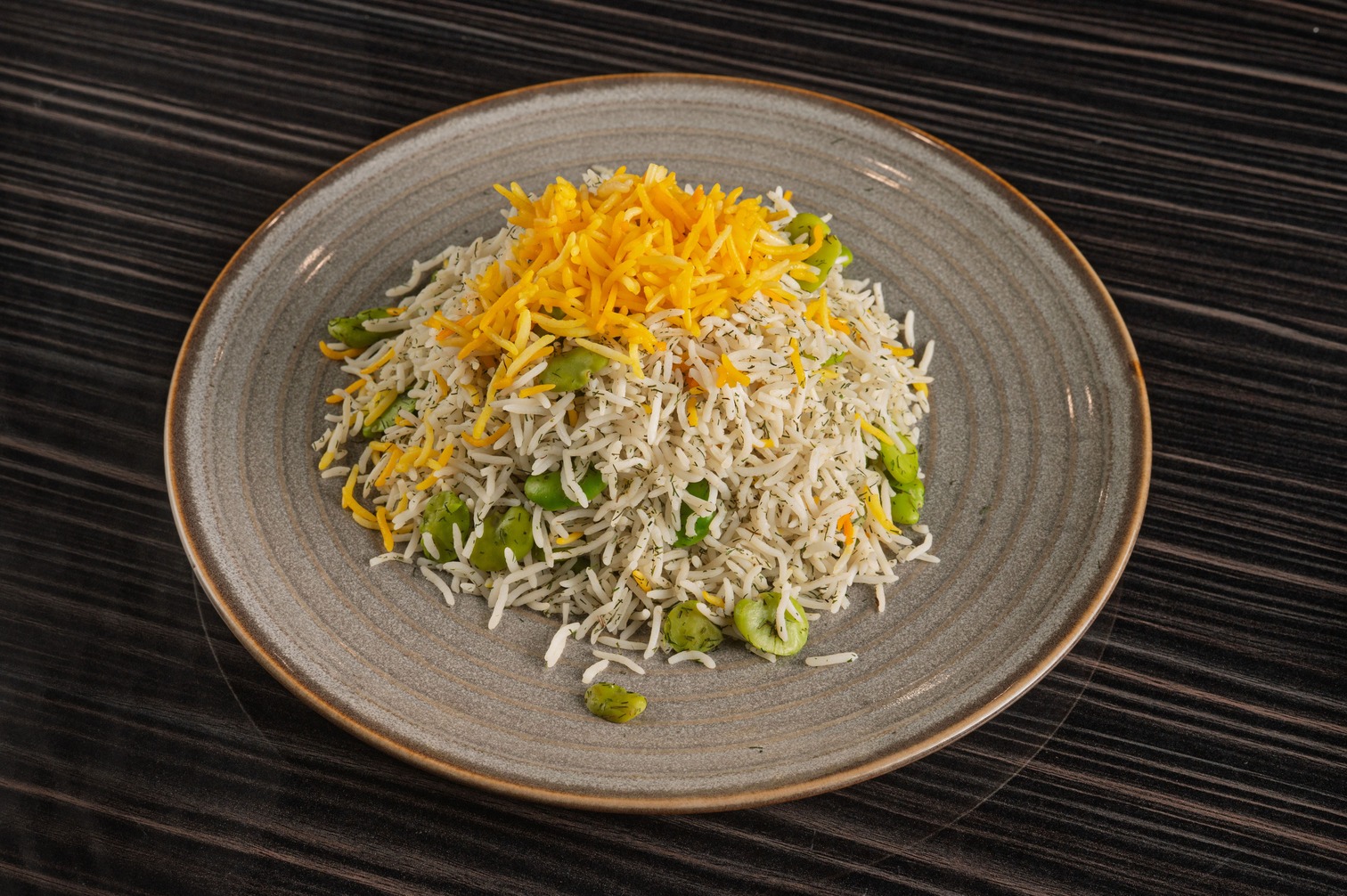
📌 Key Takeaways
This article explains Baghali Polo, a traditional Persian rice dish made with basmati rice, fava beans, dill, saffron, and fragrant seasonings. It covers the ingredients, step-by-step cooking method, and the importance of preparing crispy tahdig through slow steaming. The article also highlights popular pairings such as lamb shank, chicken, Mast-o-khiar, Shirazi salad, and torshi, along with the nutritional value of fava beans, dill, saffron, and basmati rice. Overall, it shows why Baghali Polo remains a beloved part of Persian cuisine and an excellent dish to try at a Persian restaurant Houston.
Baghali Polo is a popular Persian rice dish known for its fragrant aroma & rich flavor. The people who tried Baghali Polo for the first time usually scrape the bottom of the dish and try to get the crispy rice crust, which, according to the food enthusiasts, is the best part of the dish.
The experience of Baghali Polo for first-timers is like going into a food trance. The fragrance hits first - dill, saffron, butter - and then you take a bite, and the combination of dill, fava beans, and saffron gives the dish its distinctive flavor.
If you've spent any time exploring Mediterranean food in Houston or wandered into a Persian restaurant without knowing what to order, there's a decent chance this dish was somewhere on that table.
What Is Baghali Polo?
Baghali polo means "fava bean rice" in Farsi. At its core, it's long-grain rice cooked with fava beans and dill - but describing it that way is a little like describing a great song as "just notes."
The dish is centuries old. It shows up at Nowruz (Persian New Year), at weddings, at big family dinners where someone's been in the kitchen since morning. Every family has a version.
What separates this from every other rice dish is the cooking method. Persian rice isn't boiled and dumped on a plate. It's parboiled, layered, and slow-steamed until the bottom turns into tahdig - a golden, shatteringly crispy crust that people genuinely fight over at the dinner table.
Turns out that the crispy bottom is the whole point. It's the best part.
For a broader look at how Persian cooking fits into the regional food landscape, the Middle Eastern food guide is a genuinely useful read.
Baghali Polo Ingredients
The Baghali polo ingredients are refreshingly short. No long grocery list, no hard-to-find specialty items - just good, simple stuff used well.
Here's what you need:
-
2 cups basmati rice
-
1½ cups fava beans, fresh or frozen (peeled)
-
1 cup fresh dill, chopped - or ½ cup dried if that's what you've got
-
Salt
-
A small pinch of saffron dissolved in 2 tablespoons of warm water
-
Butter or neutral oil
-
1 potato, sliced thin (optional, but highly recommended for tahdig)
A few honest notes here:
Fresh fava beans are wonderful when they're in season. Frozen ones work just fine the rest of the year - just peel off that tough outer skin. It's a little tedious, but skipping it gives you bitter, chewy beans, and that's nobody's idea of a good time.
Don't skip the saffron. A little pinch dissolved in warm water and drizzled over the finished rice does more than you'd expect. Color, fragrance, a floral undertone that makes the whole dish feel complete. It's expensive per gram, but a small jar lasts forever when you're using it this way.
Use basmati rice. The long grains stay separate, which is exactly what this dish needs. Short-grain rice will go mushy and stick together - wrong texture, wrong result.
How to Make Baghali Polo
This baghali polo recipe rewards patience more than skill.
Step 1: Wash and Soak the Rice
Rinse your basmati under cold water until the water runs clear - you're washing out excess starch. Then soak it in well-salted water for at least 30 minutes. An hour is better. This step matters more than most people think.
Step 2: Parboil It
Bring a big pot of salted water to a rolling boil. Drain the soaked rice and drop it in. Cook for 6–7 minutes. You want the outside of each grain soft, the center still slightly firm - same idea as al dente pasta. Drain it right away. Don't let it sit in hot water.
Step 3: Layer Everything
Heat butter or oil in your pot over medium heat. If you're using potato slices - and you should - lay them flat across the bottom in a single layer. They'll crisp up and give the tahdig a gorgeous golden base.
Now add the rice in loose layers, scattering fava beans and dill between each one. Don't pack it. Pile it up loosely like a soft mound in the center. That shape lets the steam move through the rice the way it needs to.
Step 4: Steam Low and Slow
Here's the move that separates good Persian rice from great Persian rice: wrap the pot lid in a clean kitchen towel or a few layers of paper towels before putting it on. That fabric absorbs the steam instead of letting it drip back down onto the rice.
Cover the pot and steam on low heat for 35–45 minutes without removing the lid.
Step 5: The Saffron Finish
Take a few spoonfuls of the cooked rice and mix them with your saffron water. It turns this deep golden orange almost instantly. Spoon that over the top of the dish when you serve it.
Carefully remove the tahdig and serve it with the rice.
What to Serve With Baghali Polo
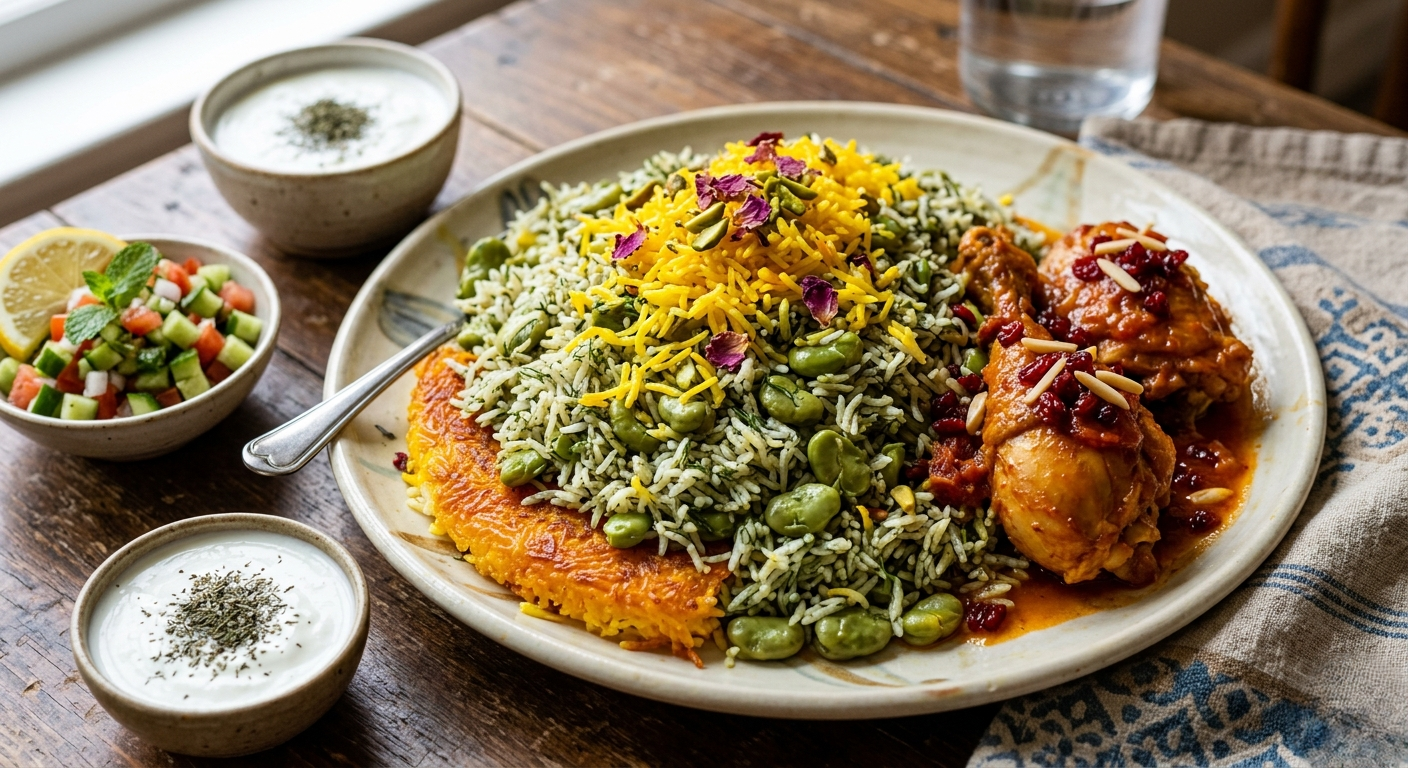
Baghali Polo with Lamb Shank is a classic dish at the Mediterranean restaurant Houston. Slow-braised until the meat falls off the bone, rich and deeply savory - it's the pairing the dish was basically built for. The dill in the rice cuts right through the richness of the lamb. The fava beans hold their own next to bold meat flavors.
Baghali polo with chicken is the lighter route. A simple braise with turmeric, onion, and lemon keeps things from getting heavy. Good weeknight option if you don't want to commit to a four-hour lamb shank.
A few things that belong on the table alongside it:
-
Mast-o-khiar - Persian cucumber yogurt, cool and tangy, balances everything out
-
Shirazi salad - cucumber, tomato, onion, lemon juice; nothing fancy, always right
-
Torshi - Persian pickled vegetables for a sharp, briny contrast
Nutritional Benefits of Baghali Polo
It's always a pleasant surprise when food this good is actually decent for you.
Fava beans carry serious nutritional weight - high in plant protein, loaded with fiber, rich in folate and iron. They've been a staple for thousands of years across the Middle East and the Mediterranean, and they have earned that reputation.
Dill adds more than flavor. It contains antioxidants and has a long history in traditional medicine as a digestive aid. Fresh herbs, in general, are highly nutritious, and Persian cooking relies heavily on them, which is one reason many people ask if Persian Food is Healthy.
Saffron has generated real scientific interest lately - researchers have looked at its potential antioxidant properties, and even its effect on mood. Whether or not you care about any of that, it makes the rice look and taste extraordinary.
Basmati rice sits lower on the glycemic index than standard white rice, meaning slower digestion and a steadier energy release. Not a health food in isolation, but a reasonable base for a balanced plate.
This is a hearty, filling meal. It's not a diet dish. But it's made entirely from real ingredients - no shortcuts, no processed anything - and that counts for something.
Make Baghali Polo Part of Your Next Meal
This baghali polo recipe asks for your time more than your talent. The techniques aren't difficult. The ingredients are straightforward. What it needs is for you to not rush it - to let the steam do its thing, to trust the low heat, to wait for the tahdig.
Do that, and what comes out of the pot is genuinely special.
If making it at home isn't in the cards right now, finding a real Persian restaurant Houston is the next best move. Not every place gets the rice right - tahdig is easy to fake and hard to do well. When it's done properly, you'll know.
Baghali polo has been feeding Persian families at celebrations and ordinary Tuesday dinners for centuries.
 Omojet