


.png)
📌 Key Takeaways
This blog explains the rich traditions behind authentic Persian food recipes and what makes Persian cuisine different from other culinary traditions. It explores popular dishes such as Kabob Koobideh, Ghormeh Sabzi, Fesenjan, Tahchin, and Lamb Chops, while also covering everyday meals, special occasion spreads, and refreshing Persian sides. The article highlights the importance of fragrant rice, fresh herbs, saffron, dried fruits, and slow cooking in creating balanced flavors. It also shows why Persian cuisine continues to attract food lovers worldwide and how a Persian restaurant Houston can offer an authentic taste of these traditional recipes.
Ask someone about Persian food recipes, and chances are they'll mention kebabs first. They're certainly a classic, but they're only one part of a cuisine that's been evolving for thousands of years. Traditional Persian recipes are built around fragrant rice, fresh herbs, saffron, dried fruits, slow-cooked stews, and balanced flavors that combine sweet, sour, and savory in ways that feel both comforting and distinctive. According to New York Times, Persian cuisine is one of the world's oldest culinary traditions, shaped over centuries across the ancient Persian Empire, which once stretched from modern-day Iran to parts of the Middle East, Central Asia, and South Asia.
This guide explores some of the most authentic Persian food recipes, from beloved everyday meals to festive specialties. You'll discover the traditional dishes that define Persian cuisine, learn what makes them unique, and get a better understanding of how a classic Persian meal comes together. Whether you're cooking at home or searching for the best Persian restaurant Houston offers, these insights will help you enjoy the cuisine even more.
Most Popular Persian Food Recipes You Should Try
A handful of dishes keep showing up on Persian tables, over and over, generation after generation. There's a reason for that - they're the ones that actually represent what this cuisine is doing. For a deeper look at regional favorites, check out this breakdown of popular Persian dishes.
Kabob Koobideh
This is the kebob people picture when they hear "Persian food." Ground beef and lamb, mixed with onion, sumac, a couple of warming spices, shaped onto flat skewers, grilled hot and fast. For anyone searching for Koobideh Kabob near me, authentic Persian restaurants are often the best place to experience this traditional dish prepared over an open grill.
A few things separate a good batch from a mediocre one:
-
The meat gets ground twice. Smoother texture, holds together better on the skewer.
-
Onion juice, not chopped onion. Chopped pieces dry out and fall apart under heat.
-
Flat skewers, not round. Round ones let the meat spin and crumble off.
-
Pulled the second it's charred. Overcooked Koobideh turns dry fast.
Lavash and grilled tomatoes are the usual sidekicks. Honestly, that's all it needs.
Ghormeh Sabzi
Ask any Iranian what their favorite home-cooked dish is, and this comes up almost every time. It's a slow herb stew - parsley, cilantro, fenugreek, a few others - cooked for hours with lamb or beef, dried limes, and kidney beans.
What actually makes it work:
-
The herbs get sautéed first, alone, before anything else hits the pot
-
Dried limes (limoo amani) get cracked or pierced, not left whole, so the sourness actually comes through
-
Low and slow matters more than any single ingredient - there's no shortcut here
-
Fenugreek is present in small amounts, but it carries most of the smell
The kitchen smells incredible while it cooks. Served over basmati, it somehow tastes better the next day, which is rare for most dishes.
Fesenjan
A walnut and pomegranate stew that sounds strange until you taste it. Ground walnuts thicken the sauce. Pomegranate paste adds a tart edge that cuts through all that richness. Chicken or duck simmers in there until it falls apart.
This one's usually saved for special occasions, not a Tuesday night. Once you've had it, that makes sense.
Tahchin
Basically a saffron rice cake, baked with yogurt-marinated chicken layered between rice. Flip it out of the pan, and the bottom comes out golden and crisp - same idea as tahdig, but built into a whole layered dish instead of just a crust at the bottom of a pot. Pistachios and barberries scattered on top finish it off.
Lamb Chops
Simple, but done right, genuinely memorable. Marinated in saffron, garlic, and lemon, grilled until tender. These don't need much dressing up. Good seasoning, a hot grill - that's most of the job done.
Traditional Persian Meal Ideas for Every Occasion
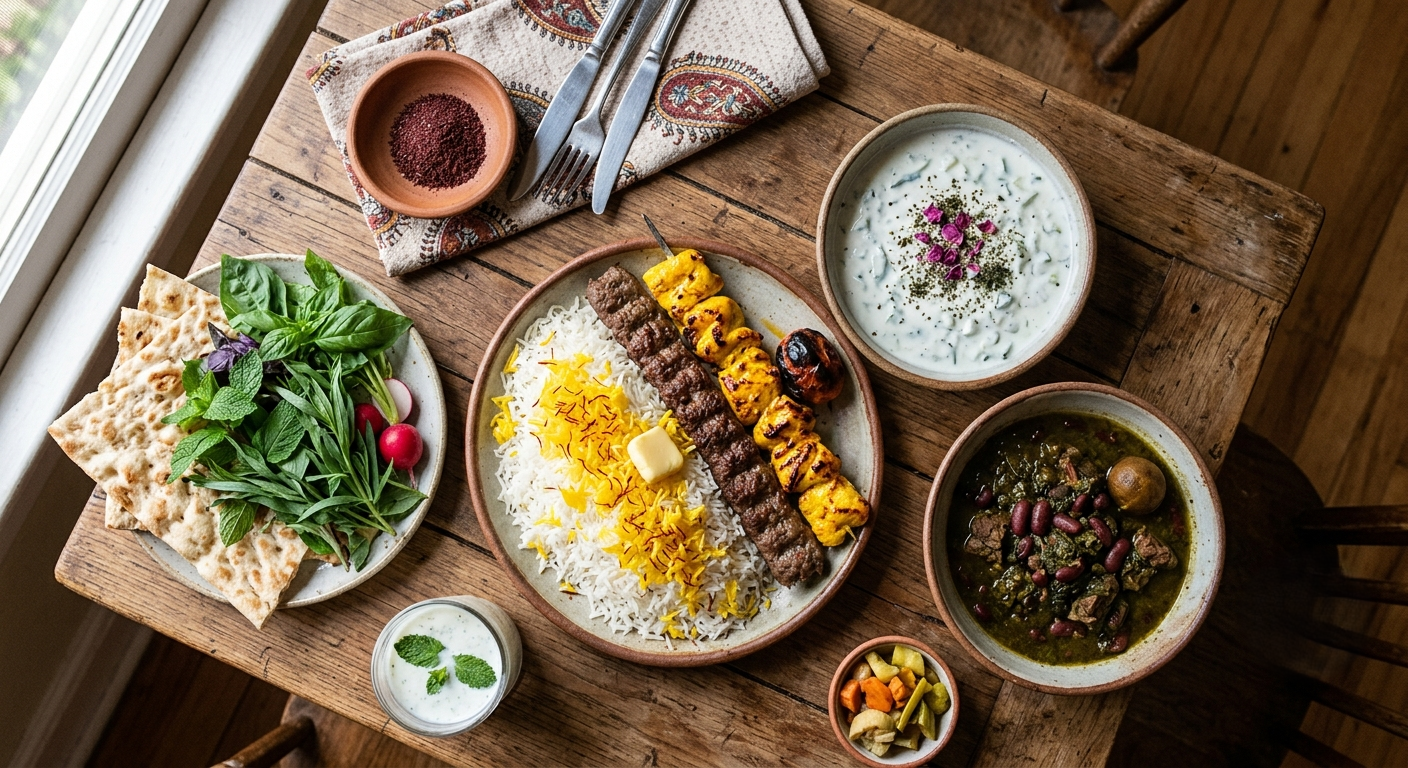
A Persian meal isn't usually one plate sitting alone. It's a spread - rice, a stew or protein, herbs, yogurt, bread, all at once, nothing in courses. Curious what that actually looks like on the table? This guide to Persian dinner dishes walks through it in detail.
Everyday Family Meals
On a regular weeknight, you'll see something simpler. Adasi, a lentil soup that comes together fast, or Sosis Bandari, a spicy sausage skillet dish under an hour start to finish. These are the meals nobody plans for - the kind a parent throws together after work because the lentils were already soaking.
Special Occasion Spreads
Holidays and gatherings call for the bigger stuff - Zereshk Polo with chicken, Albaloo Polo with sour cherries, or a full Ghormeh Sabzi spread with several sides. A typical setup usually includes:
-
A saffron rice dish, ideally with a crisp tahdig crust at the bottom
-
One or two stews, set down family-style in the middle of the table
-
A fresh herb platter (sabzi khordan) and warm bread
-
Something yogurt-based to balance out the richness
Nowruz, Persian New Year, brings out the most elaborate cooking of the year. Sabzi Polo with fish is close to mandatory at that point.
Light and Refreshing Sides
No Persian meal feels finished without something cool sitting next to all that richness. Salad Shirazi - chopped cucumber, tomato, onion, lime - shows up at nearly every table, no matter the occasion. Abdoogh Khiar, a cold yogurt and cucumber soup with herbs and walnuts, does the same job in summer.
Why Persian Food Recipes Are Popular Around the World
There's a reason finding a persian restaurant nearby is becoming easier Persian restaurants are popping up in cities that had basically zero exposure to Iranian cooking just a few years back. If you're still wondering what is Persian food, here's the short version: bold, herb-heavy flavor that doesn't lean on spice or heat the way other cuisines do. Saffron, dried limes, pomegranate, and sour cherries-most people haven't tasted these together before, and once they do, it sticks.
The whole from-scratch, herb-forward style fits how people want to eat right now less processed, more made by hand. If you're looking for the best Persian food in Houston, you'll notice these qualities are at the heart of the experience. Moreover, the social setup of a Persian meal, with everything shared at once on the table, matches how people actually like gathering around food these days.
It doesn't hurt that the food photographs well, either. Saffron rice with a crackling tahdig crust. Deep green herb dishes. Jeweled rice studded with barberries and pistachios. People want to post a picture before they eat it, and that's done more for the cuisine's reach than any marketing campaign could.
Conclusion: Savor the Authentic Taste of Persian Food Recipes
Persian cooking rewards patience, full stop. The stews take hours. The rice has to steam exactly right. None of it is fast food, and honestly, that's the whole appeal. Start with a few classics - Koobideh, Ghormeh Sabzi, Tahchin - and build from there, or just go find a Persian restaurant nearby that still takes those classics seriously. Once you've sat down to a proper Persian meal, rice and stew and herbs and bread all sharing the table at once, you'll get why this cuisine hasn't needed to change much in a few thousand years.
 Omojet