


📌 Key Takeaways
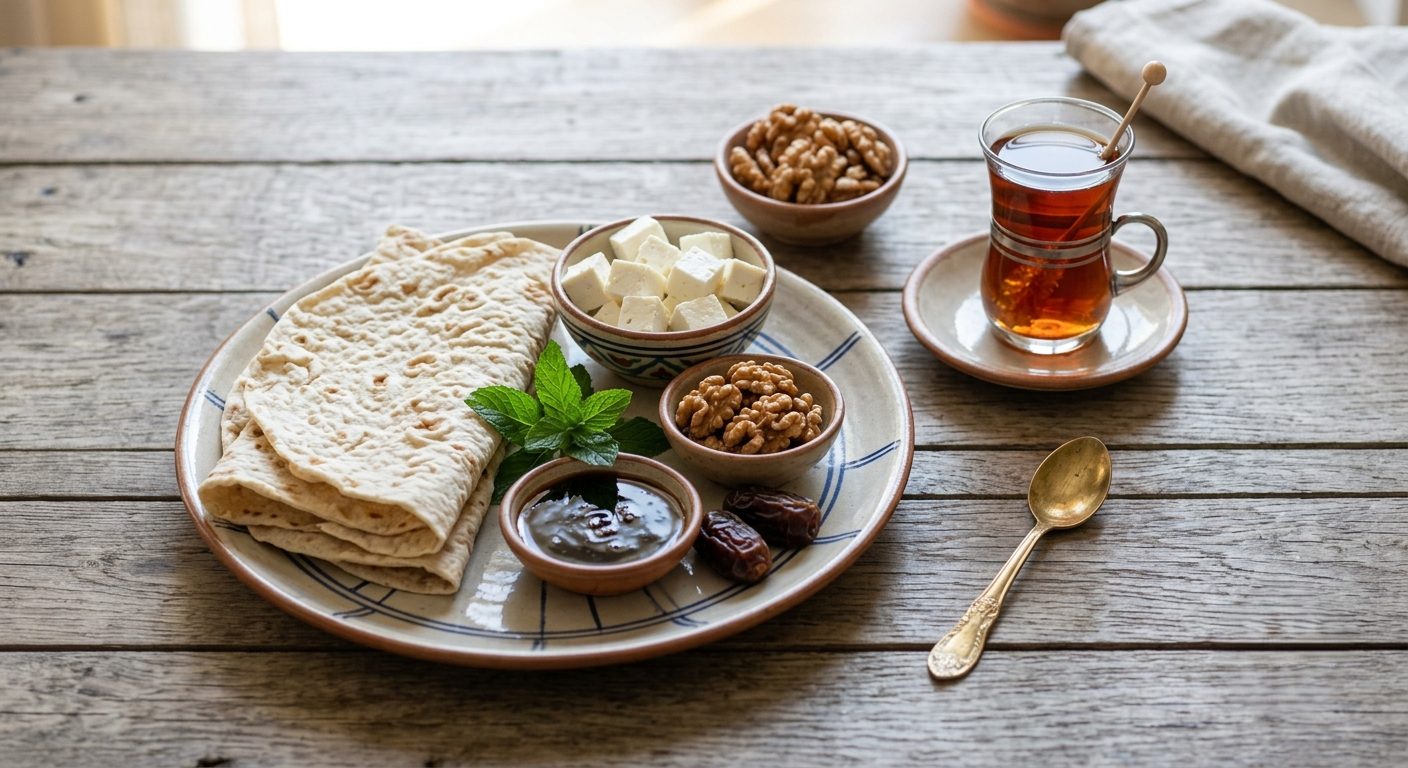
A Persian breakfast isn't one dish, it's a small spread of things eaten together: hot barbari bread, feta cheese, walnuts, kaymak, honey, and black tea poured strong. This article covers what's actually worth trying, a few recipes you can attempt at home, and why the whole meal feels different from a typical Middle Eastern breakfast.
Most of what people know about Persian food comes from dinner. Bread, cheese, walnuts, honey, tea, that's more or less the whole breakfast, and almost none of it requires a stove. This piece goes through the Iranian breakfast foods worth knowing, a couple of simple recipes, and what makes the morning meal different from what you'd get in Turkey or Lebanon. According to Wikipedia, Iran produces nearly 90% of the world’s saffron, making this prized spice an essential part of Persian cuisine. It is widely used in traditional rice dishes, stews, and desserts, adding a distinctive flavor, delicate aroma, and rich golden hue.
What Is a Persian Breakfast?
There isn't one dish that sums it up. It's a table with several small things on it at once. Bread, a block of feta-style cheese, a bowl of walnuts, maybe jam or honey, and black tea kept warm since whoever's up first put the kettle on.
Bread is the anchor. In plenty of households, someone still walks to the bakery for it, still warm in the bag, and everything else on the table is really just there to go with it.
Honestly, this side of Persian cooking gets overlooked far too often. Food writers tend to focus on the rice, stews, and kebabs while skipping breakfast, which is a shame because it reveals the unhurried nature of Persian food culture. You can even discover these relaxed morning traditions at a Mediterranean restaurant Houston, where Persian-inspired dishes bring those comforting flavors to the table.
The Essential Persian Breakfast Foods
None of this takes much skill. That's kind of the appeal.
Barbari and Sangak Bread
Barbari is thick and a little chewy, usually topped with sesame or nigella seeds. Sangak gets baked directly on hot pebbles, so it comes out with a rough, dimpled crust and a bit of smoky flavor. Both get torn by hand. Nobody's reaching for a bread knife here.
Feta Cheese and Fresh Herbs
The cheese is close to Greek feta - salty, crumbly, sold in blocks. It usually comes with sabzi khordan, a small plate of mint, basil, and tarragon. Fold some cheese and a couple of herbs into a torn piece of bread and eat it in one go. Sounds plain on paper. Works better than you'd expect.
Kaymak
It is a thick and rich butter cream spread on warm bread with honey drizzled over it. It is the richest dish of all and usually the first course that a first-time visitor inquires about. This product is somewhere between butter and whipped cream, but with a much higher density than either of these products.
Walnuts and Dried Fruit
A small handful of walnuts is set to salt on nearly every morning, occasionally accompanied by a few dried mulberries or apricots for sweetness. In Persian cooking, they are used frequently in both sweet and savory dishes, not only as a breakfast staple, so it is not surprising that walnuts are a regular part of our diet.
Halim
Halim doesn't fit the pattern of everything else here. It's a slow-cooked porridge made from wheat and shredded meat, usually turkey or lamb, blended down until smooth and finished with cinnamon and sugar. Heavier, slower to make, more of a weekend thing. It tastes far better than that description makes it sound.
Kookoo Sabzi
A baked herb frittata, thick with parsley, cilantro, and dill. Half the time it's leftover from dinner the night before, cut into squares, and eaten cold the next morning without anyone reheating it.
Nan-o Panir-o Sabzi
Bread, cheese, and fresh herbs that’s essentially what the name translates to, and it’s a simple breakfast many Iranians enjoy on a typical weekday. There’s no cooking, complicated preparation, or pile of dishes afterward. It’s about as close as Persian food Houston gets to grabbing a quick slice of toast before heading out the door.
What Makes Persian Breakfast Different?
Set it alongside other Middle Eastern breakfast traditions, and the differences stand out almost as much as the similarities. Eggs aren't as essential as they are in a Turkish or Lebanese spread, and hummus rarely makes an appearance before noon. These differences are part of what makes exploring the best Mediterranean food Houston so interesting, especially when discovering the variety of regional breakfast traditions.
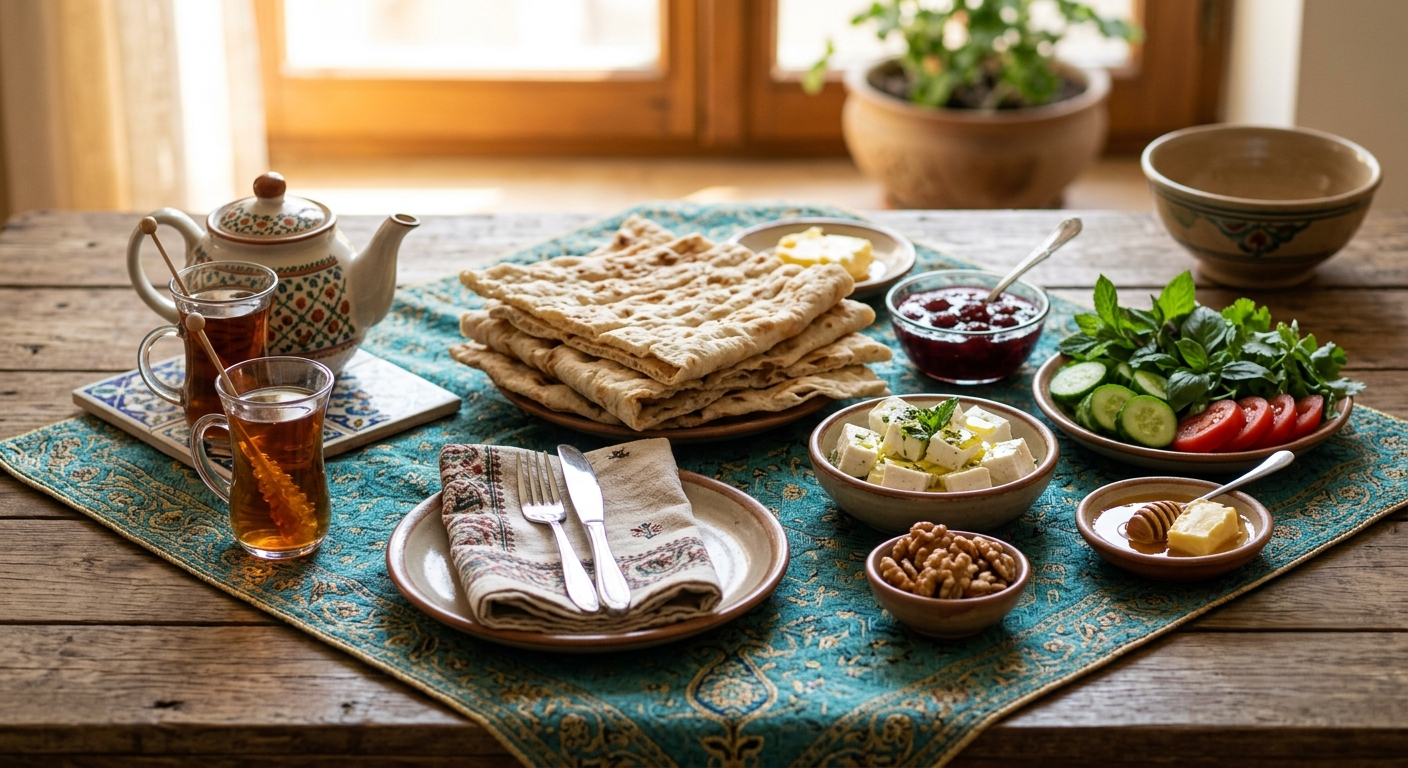
The bigger difference is how people eat it. Nobody plates their own portion. Everyone reaches into the same bowls and tears off pieces from the same loaf, which sounds like a small thing until you realize it turns an ordinary morning into something closer to a shared meal instead of a solo one.
Tea, Not Coffee
Coffee exists in Iran, sure, but tea runs the table. It's brewed strong in a samovar and served in small glass cups, refilled more than once. Some people still place a sugar cube between their teeth and sip the tea through it instead of stirring sugar in. Old habit, still around, and a genuinely smart way to control how sweet each sip is.
What to Serve for a Persian Breakfast
You don't need to cook much for a Persian brunch at home. Start with bread, since that's what holds the whole thing together. If barbari from scratch isn't happening, a Middle Eastern bakery will do the job fine.
Add feta, a bowl of walnuts, honey, and a jar of good jam - sour cherry if you can track it down. Fresh herbs are a nice touch if you want the fuller version. Kookoo sabzi can be made the night before, then served cold or warmed slightly.
Tea isn't optional. Brew it strong, let guests thin it out with hot water to their own taste, and pour it into small glasses if you have any lying around. Small detail, but it matters more than it should.
A spread like this also works as a weekend brunch for anyone trying Persian breakfast recipes for the first time. Nothing on the table needs an explanation, and there's usually something even a picky eater will go for.
Conclusion: Start Your Day the Persian Way
Unlike a more elaborate Iranian dinner, a traditional Iranian breakfast can be wonderfully simple just fresh bread, cheese, walnuts, and tea. It’s a satisfying meal that you can also experience when visiting a Persian restaurant Houston, where these classic flavors are served in a warm, traditional setting.
Therefore, if you want to start your day right, this is the most suitable option, since it is not difficult to prepare and is quite enjoyable.
 Omojet