


.png)
📌 Key Takeaways
This guide explores Gheimeh Bademjan, a traditional Persian eggplant stew made with tender meat, split peas, tomatoes, fried eggplant, dried Persian limes, and saffron. It explains the importance of patience in Persian cooking, provides an authentic recipe with step-by-step preparation tips, and highlights how the dish represents Persian comfort food and family traditions. For those who prefer to enjoy this dish without cooking, the article also recommends Aban Persian Restaurant as a persian restaurant houston where diners can experience authentic Persian flavors.
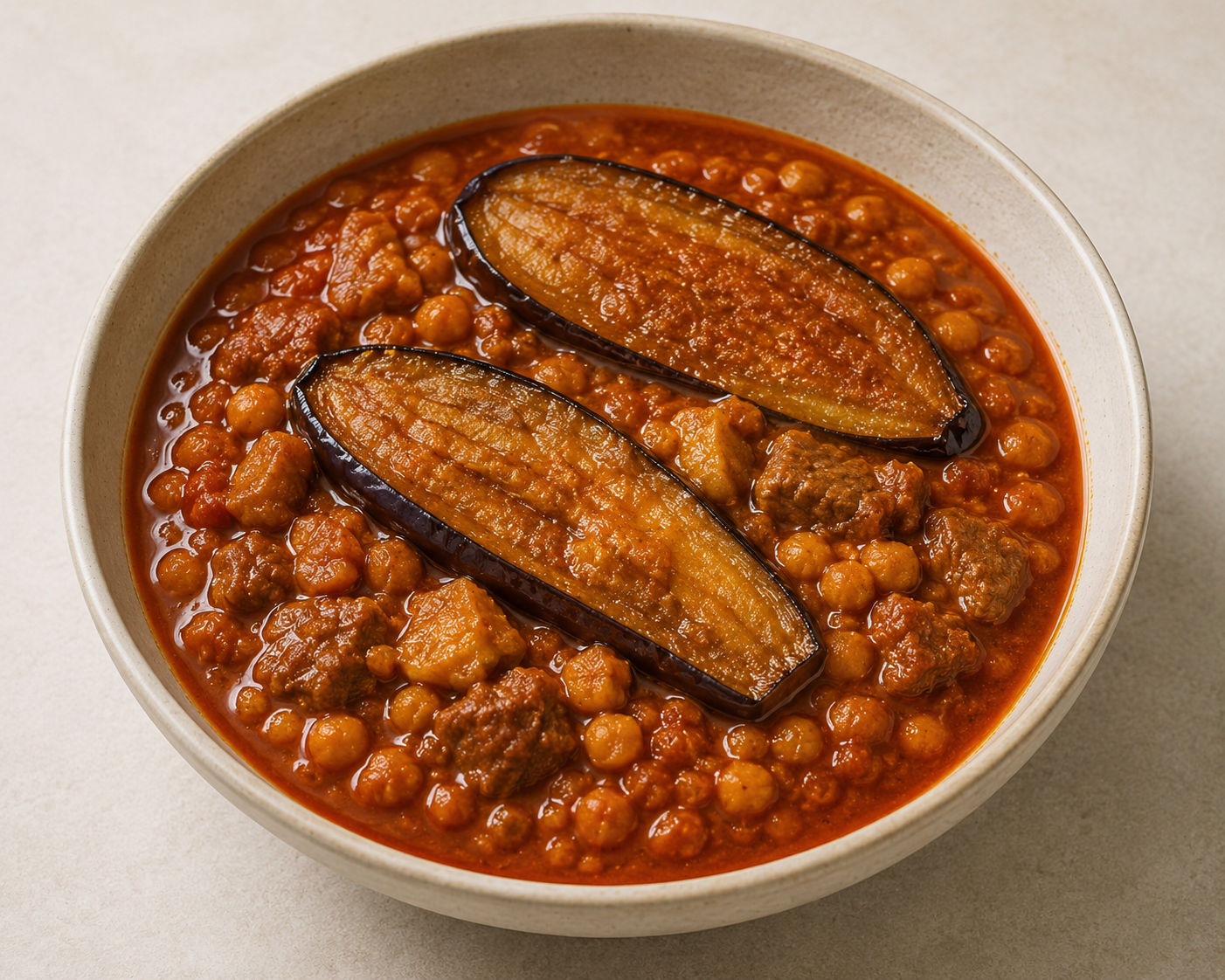
Persian Eggplant Stew or Gheimeh Bademjan is a traditional stew prepared from succulent meat along with other essential ingredients like chickpeas, tomatoes, and fried eggplant. It is made with onions, turmeric, and dried lime, which gives it an amazing flavor. This dish is often served with saffron rice as an ultimate family dish in Persian homes.
Gheimeh Bademjan is one of the dishes that has a unique flavor because of the right combination of flavors and textures in the dish. In Gheimeh Bademjan, eggplants take the tomato sauce inside themselves, and chickpeas make this dish richer than ever. Despite being easy to make, it is an outstanding recipe.
The Stew That Made Me Look Stupid at a Dinner Table
This was how my experience was when I sat down for dinner for the first time to try Persian food.
-
A rich bowl placed before me, dark, deep, golden from the surface down, and it smells like heaven. I asked what the thing was, and got the answer that it was called Gheimeh Bademjan. Nodding my head while pretending to know what that is. But in reality, I didn't know what that meant. I began devouring my portion immediately for obvious reasons.
-
After half of the contents were devoured, I asked about the ingredients of the dish. I received a list, and stopped right when I heard the eggplant. Because I did not believe it, since I grew up eating eggplant, yet I have never experienced something of the sort. Never.
-
In other words, I was just having my eggplant wrong all along.
-
The Gheimeh Bademjan is an Iranian dish consisting of eggplant and has been enjoyed by Iranians for years. Some of the materials used to prepare the dish include lamb, beef, yellow lentils, fried eggplants, dried lime, tomato, and saffron. The dish can be taken to different kinds of events, such as during the celebration of Nowruz, Friday lunch at home, and other similar occasions. This dish forms a true representation of Iranian cooking since none were created overnight; some of them are even extinct today.
Why Is Persian Cooking Different from Your Expectations?
Before diving into the actual recipe, I would like to share with you something I have learned in reference to the Persian cuisine.
No, it is not a matter of spicy flavors as with Indian cuisine. No, it is not a matter of the freshness of herbs as with Vietnamese cuisine. It is a matter of time.
The onions in Gheimeh Bademjan need 15 minutes minimum to bring out that caramelized sweet onion flavour. If undercooked, onions taste sharp and raw and ruin the whole base. The dried limes sit in the pot for two hours. Two hours. They don't dissolve. They don't disappear. They just slowly, very slowly, release this sour depth that makes the whole dish taste like heaven.
There's a reason this is Persian comfort food that families have been making for generations. It's not complicated. But it requires patience. And most recipes don't actually tell you that — they just list ingredients and steps and assume you'll figure out the rest.
What to Buy to Make Authentic Gheimeh Bademjan
Okay. Shopping list. Nothing weird, I promise — except the dried Persian limes which you might need to order online or find at a Middle Eastern grocery store. Do not skip them. Do not substitute with regular lime juice. They are completely different things, and the recipe doesn't work the same without them.
Recipe for the Stew — enough for 4 to 6 people:
-
1.5 lbs lamb shoulder or beef chuck, cut into small pieces
-
1 cup yellow split peas — rinse them, soak them for an hour if you want to plan ahead
-
3 medium eggplants — firm, not wrinkly, not soft when you press them
-
1 big onion, diced as small as you can manage
-
1 can crushed tomatoes, 14 oz
-
3 tablespoons tomato paste
-
3 or 4 dried Persian limes — poke holes in them with a fork before they go in, otherwise they just float around uselessly
-
Half teaspoon saffron, bloomed in 3 tablespoons hot water, not boiling, just hot
-
1 teaspoon turmeric
-
Half a teaspoon of cinnamon
-
Salt, black pepper, and vegetable oil for frying
For serving:
-
Fresh herbs on the side if you want them
Making It — What Nobody Tells You
The Eggplant Step That Most People Rush and Shouldn't
Slice your eggplants into rounds. Salt them on both sides. Leave them on a tray for 30 minutes. After sometime you will find moisture sitting on the surface — that's the bitterness coming out. Pat them completely dry.
Fry them now. In hot oil. In batches, don’t overcrowd the pan. Fry them till they turn golden-brown on both sides, and not pale and soft. This is the step that distinguishes between Gheimeh Bademjan, which tastes fantastic, and Gheimeh Bademjan, which is good. Drain them and leave them be.
The Part Where Patience Actually Matters
Heavy pot. Dutch oven, if you have one, whatever thick-bottomed pot you own. Oil over medium-high heat. Onions in. Now here's what I need you to actually do — cook those onions for 12 to 15 minutes. Set a timer if you need to. Don't check Instagram and come back to pale, sad onions. Stir occasionally, let them sit for some time.
When they're properly golden — and they will smell sweet and caramelized, then add turmeric, stir for a minute. Add your meat. Salt and pepper. Leave it alone long enough to actually turn the color to brown on each side. Don't just stir it constantly. Let it make contact with the pan. This takes 8 to 10 minutes in total, and there is no shortcut.
Building the Sauce
Stir in the tomato paste. Cook it for 2 to 3 minutes. It'll go from bright red to a darker rusty color and start smelling almost nutty. That's what you want. Add the crushed tomatoes, drop in your pierced dried limes, add cinnamon, and pour in the saffron water. Add enough plain water to just cover everything — maybe 2 cups, maybe a bit more depending on your pot.
Bring it to a boil. Drop to low. Put the lid on. Leave it like that for 15 minutes.
Split Peas
After fifteen minutes, add the soaked and cleaned split peas. Give it one stir. Put back the lid. Simmer over low heat for forty to forty-five minutes. Keep an eye on it occasionally. If it starts becoming too thick, add some water. The split peas should soften and make the broth thicker without breaking apart completely. This is how you can prepare a Persian stew that has a texture.
The Last Step — Where It All Comes Together
Place the fried eggplant pieces on top of the stew carefully. Slightly press them into the stew so they are touching it. Replace the lid. Cook over the lowest heat possible for twenty to twenty-five minutes.
I'm telling you — something happens in this last stretch that I still find kind of hard to explain. The eggplant that was already good from frying becomes something completely different. It absorbs the saffron, the tomato, and the sourness from the dried limes. It becomes silky and deep and is completely integrated into the stew.
Taste it before serving. Add salt if needed. If you want more sour — and you might — squeeze one of the softened limes directly into the pot.
Serving
Rice first. Big spoonful of Gheimeh Bademjan on top. A couple of pieces of eggplant are placed where they're visible. Herbs on the side.
Eat it hot. Don't let it sit.
If You're in Houston and Just Want Someone Else to Make It
It has been quite some time. After reaching home, you wouldn’t have enough energy to cook for yourself. Being exhausted, along with the clutter in the kitchen, is more than enough for one to deal with.
If you find yourself in this situation and live in Houston, then I would recommend you visit Aban Persian Restaurant. The food at Aban restaurant tastes like they actually understand Persian cuisine, not as a concept to execute but as something people grew up eating and care about getting right.
Gheimeh Bademjan is exactly the kind of slow, careful Persian comfort food that shows whether a kitchen is cutting corners or not. You can taste the difference. At Aban, you would know that it's being done properly.
First time trying Persian cuisine? If you're searching for a persian restaurant houston, Aban is genuinely approachable, and a very friendly place. Have strong opinions about what traditional Persian food should taste like? Visit Aban & experience the delicacy. Check the menu at Aban Restaurant before you go.
Honestly, Just Make It or Go Eat It
Gheimeh Bademjan doesn't need me to oversell it. It's been around for centuries without a marketing budget, and it's doing just fine.
It's traditional Persian food that earned its place at every important table — Nowruz dinners, family gatherings, the kind of meals people remember. Persian cuisine is built on patience and balance, and ingredients that actually matter. And Gheimeh Bademjan is one of the best expressions of all of that in a single bowl.
Make it yourself on a Sunday when the kitchen feels less like a task and more like somewhere you want to be. Or go to Aban Persian Restaurant and let someone who's been doing this longer than either of us handle it.
Either way, try it. That's really all I'm saying.
 Omojet